Ten people enable communal passages
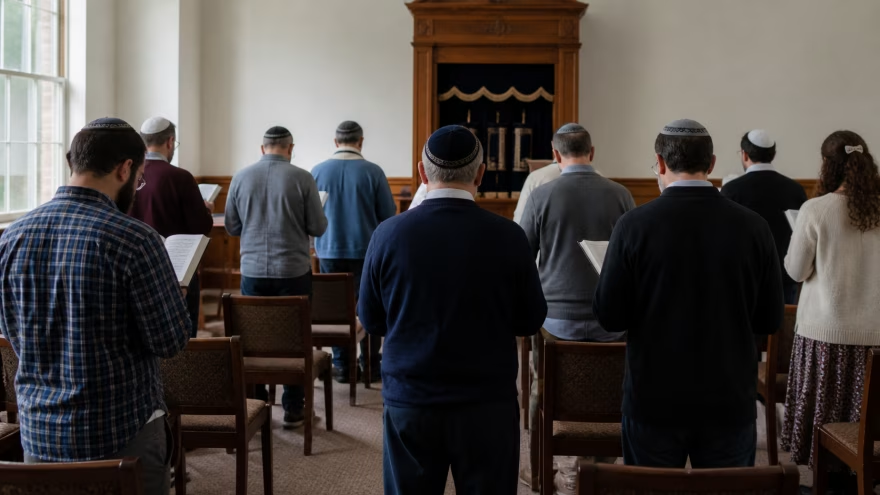
A minyan is required for passages such as Barechu, Kaddish, Kedushah, the repetition of the Amidah, and public Torah reading. Private prayer without it remains possible and meaningful, but some sections are omitted. The distinction is not whether a person may address God. It concerns what the community can do as a body.
Movements differ over who may be counted
Orthodox and many traditional communities count ten adult Jewish men. Conservative, Reform, and other egalitarian communities generally count adults regardless of gender. The difference is not a minor technicality. It expresses differing understandings of religious obligation, authority, and equal participation.
Each arrival can make the difference
In a small community the ninth person may wait for a tenth so that a mourner can recite Kaddish. A minyan therefore creates a concrete responsibility. A participant does not come only for a personal spiritual need. Their presence allows another person to fulfil an obligation, mourn in community, or read publicly from the Torah.
Digital presence opened a debate
During the pandemic some communities experimented with a minyan by video call, while others rejected it because the traditional quorum gathers physically in one place. The debate continues beyond the emergency. It shows that technology raises more than questions of sound and image. It asks what it means to be genuinely present.