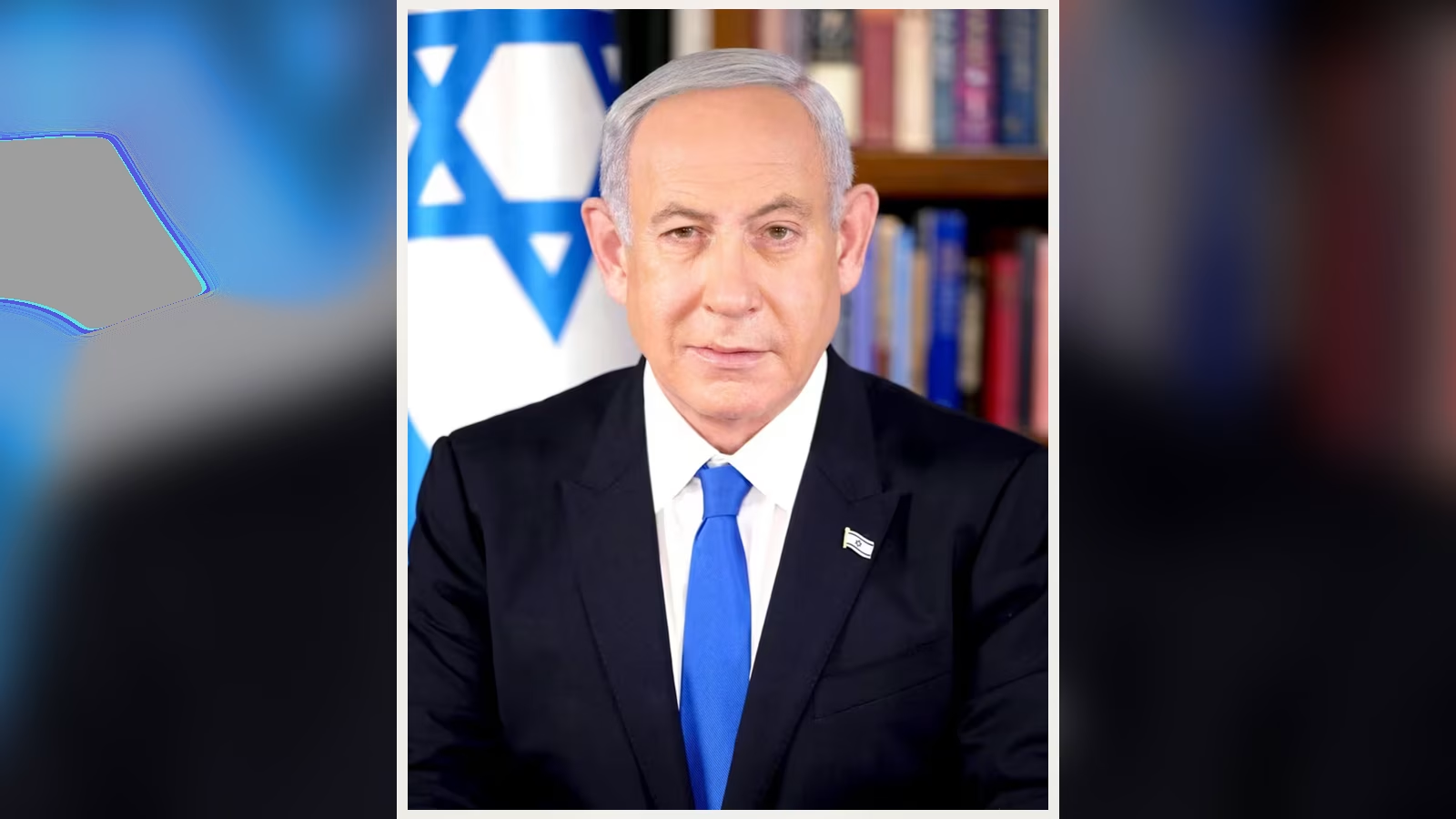
Israel's longest-serving prime minister
Netanyahu first became prime minister in 1996, returned in 2009, led until 2021 and formed Israel's 37th government after the 2022 election. His cumulative terms make him the country's longest-serving premier and a central reference point for political opponents.
His importance is not only longevity. He reshaped how Israel communicates security risks, handles major powers and markets its technology and economy. Supporters see experience, pressure-tested leadership and national independence; critics see deeper division and excessive personalisation. Both shape his position.
From the military and diplomacy to Likud leadership
Born in Tel Aviv in 1949, Netanyahu spent part of his youth in the United States and returned to serve in Sayeret Matkal. That service and the death of his brother Yonatan at Entebbe became part of his public story. He later studied architecture and management at MIT and worked in business.
He entered top politics through diplomacy, serving as Israel's UN ambassador in the 1980s and becoming a prominent English-language advocate. Back in Israel he became a Likud MK, deputy foreign minister, party leader and opposition leader, combining media skill with security arguments for domestic and international audiences.
Economic policy and the technology sector
As finance minister from 2003 to 2005, Netanyahu promoted spending restraint, privatisation, labour reforms and liberalisation. Assessments of social effects differ, but he has continued to present technology entrepreneurship, foreign capital and exported know-how as sources of Israeli strength.
His governments promoted Israel in cyber, semiconductors, medical technology and research while confronting living costs, competition, housing and unequal labour participation. Economic policy also means infrastructure, education, defence spending and retaining experts and R&D centres.
Security and foreign policy
Netanyahu stresses deterrence, military and intelligence superiority and preventing an Iranian nuclear weapon. He has cultivated the US alliance and ties with India, Central Europe, Africa and Gulf states. The 2020 Abraham Accords opened official relations and business with several Arab countries.
After Hamas's 7 October 2023 attack, war leadership, hostages, allies and the region's future dominated his office and Israeli debate. Reporting should distinguish the cabinet's verified authority and goals from disputes over implementation; the prime minister coordinates the security cabinet within a multi-institutional system.
Coalition, institutions and domestic dispute
The 37th government joined Likud with religious and right-wing parties, shaping budgets, religion-state relations, settlements and constitutional policy. Judicial reform plans caused mass protests, professional opposition and investor concern; the government said they would rebalance elected bodies and courts, showing that law is also an economic issue.
Netanyahu also faces criminal proceedings and denies the allegations. Jews.cz preserves the presumption of innocence and draws no judicial conclusion, while recognising the case as relevant institutional context alongside protests, coalition bargaining and debate about leadership accountability.
What his office means for Czech partners
Czech firms and institutions should watch decisions by the prime minister's office in cyber, AI, investment and intergovernmental programmes as well as speeches. It coordinates strategic bodies across ministries and can influence political priority, international frameworks and regulatory pace in technology and defence.
Netanyahu is a defining political figure but not Israel's only decision-maker. Accurate understanding also follows the Knesset, courts, ministries, central bank, municipalities, business groups and civil society. This profile maps a role and career rather than endorsing the cabinet's politics.
Sources and editorial note
The Jews.cz editorial team prepared this article from the public materials below, distinguishing company or institutional claims, independently documented facts and editorial interpretation.