The obligation comes after satisfaction
The biblical source calls on a person to bless after eating and being satisfied. Unlike the short blessing before food, Birkat Hamazon arrives at a moment of abundance. It prevents fullness from creating an illusion of complete self sufficiency. A meal reflects human work but also soil, water, society, and circumstances that no individual controls completely.
Four blessings widen the subject
The first blessing gives thanks for food for every creature. The second connects nourishment with the land and the history of Israel. The third asks for mercy on Jerusalem and restoration, and the fourth emphasizes divine goodness. Further petitions follow. Ordinary dining therefore becomes a brief summary of theology, history, and hope.
A shared meal has a shared invitation
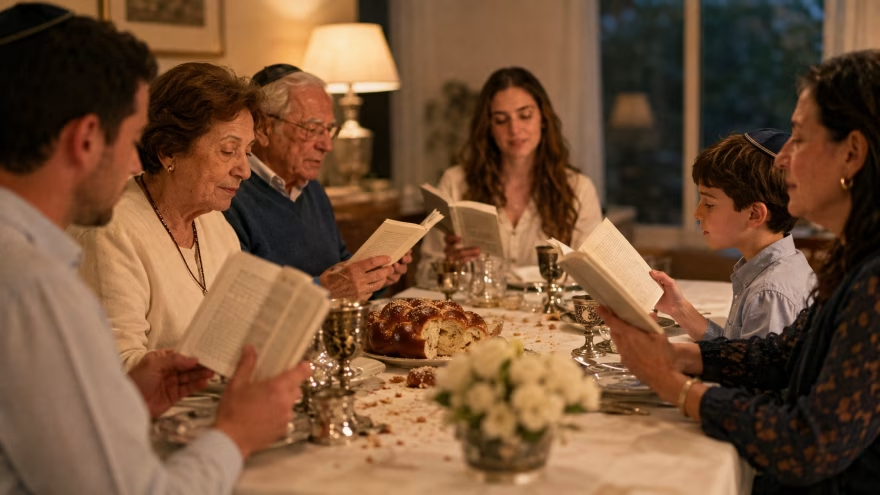
In traditional practice, when at least three adult men have eaten bread together, a zimmun introduces the prayer as a mutual invitation to bless. Movements and communities differ in the participation of women and in textual details. The underlying principle remains visible: gratitude is not only a private feeling but can become the response of a group.
The tradition has several melodies and versions
Ashkenazi, Sephardi, Italian, and Yemenite forms differ in details, particularly in final petitions and songs. Shabbat, festivals, and weddings bring additions. A visitor should not expect one universal melody. It is more useful to recognize the moment, follow the host, and respect the pace of the particular table.