A monument dating from 1892
The ceremonial hall at Břeclav's Jewish cemetery dates from 1892. The building, with a neo-Gothic ribbed vault, historic decoration and biblical inscriptions in Hebrew and German, was intended for final farewells to deceased members of the local community.
After restoration, the hall opened to the public on 19 May 2024. Saving such a building is more than repairing architecture: it returns to the urban landscape a concrete trace of people whose lives unfolded in Břeclav for generations.
A place for remembrance and learning
Břeclav's Jewish community was destroyed during the Shoah. The cemetery and ceremonial hall therefore no longer have the original communal setting that gave them everyday significance. It is all the more important to place them clearly within local history.
The reopened hall can serve visitors, schools and researchers. It recalls that Jewish heritage in South Moravia is not a foreign appendix to Czech history but part of that history itself.
The ceremonial hall explains care for the dead
The building at the Jewish cemetery was neither a synagogue nor an ordinary chapel. It served activities connected with preparation for burial, farewell and the work of the burial society. Interpretation should respect both religious meaning and local history rather than turning the space into an architectural attraction alone. Visitors need to know how its rooms functioned and which elements are original, restored or newly added.
Jewish burial customs emphasise the dignity of the deceased, simplicity and the permanence of the grave. Specific practice can vary by community and period. Museum texts should use accurate terminology and be reviewed by specialists. Sensitive objects and personal stories must not become decorative effects; displaying them requires context and respect for descendants.
Restoration must distinguish conservation from reconstruction
A heritage specialist decides what to retain as found, what to stabilise and what documentation permits to be replaced. A new element must not be presented as original. Photographs, a building survey and a description of materials help visitors understand the intervention. A trustworthy reconstruction does not pretend to be complete where evidence is absent and instead acknowledges gaps in knowledge.
A historic building needs a maintenance plan after opening. Humidity, the roof, heating and visitor use can quickly damage the investment. The budget should not be exhausted by ceremonial restoration alone. The operator needs regular inspections, a responsible person and income for small repairs. Sustainability is measured by the building's condition in ten years, not merely by a ribbon-cutting photograph.
The site recalls a community that was not abstract
The cemetery carries names of particular families, professions and generations connected with Břeclav. A digital catalogue of gravestones, registers and archival documents can restore links broken by the war and post-war changes. A visitor programme should connect architecture with people's lives and state what is known about them. The monument then avoids reducing Jewish history solely to destruction and persecution.
Schools and local historians may contribute photographs and testimony, but these require verification. Family memory is a valuable source without necessarily being exact in every date. A public archive should distinguish a documented fact, testimony and a working hypothesis. This transparency allows research to continue without turning stories into unverifiable legend.
The embassy report is a beginning, not the entire story
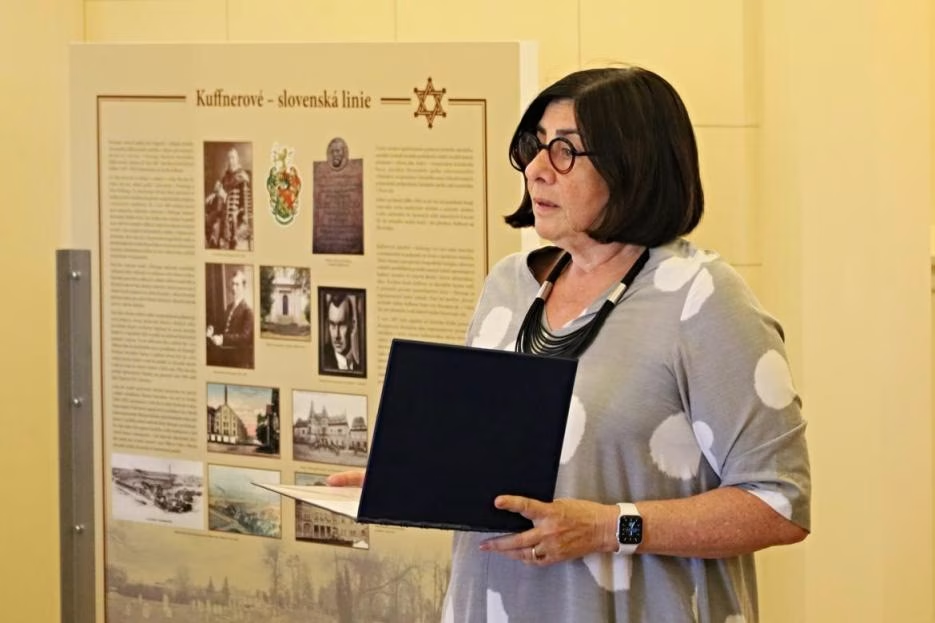
The ambassador's official participation demonstrates the restoration's diplomatic importance and can attract attention. A complete article also needs information from the owner, heritage specialists, restorers and the local community. Each describes a different part of the project. Source credits for photographs and the original opening date preserve the event's history without making an old press release look like current news.
Practical value for readers lies in links to opening arrangements, accessibility and cemetery rules, all checked separately. Jews.cz can continue to follow the site through exhibitions, attendance, maintenance and new research. A one-off report then becomes sustained coverage of religious heritage and its contemporary life.
A further visit should examine operation and interpretation
After reopening, it is possible to verify opening hours, building condition, accessibility and exhibition content. An editorial report should speak with the manager, a heritage specialist and an expert on Jewish burial customs and distinguish their roles. It should also establish how routine maintenance is financed and whether there is a documented plan. Photographs should show specific features with captions rather than use gravestones as anonymous atmosphere.
Local schools and families may add history, but their information needs archival checking. A digital list of names or building interventions would let research continue and errors be corrected. The ambassador's presence belongs to the opening story, while local institutions create the monument's present life. The article should be updated with new sources, not by moving its original date. The 2024 event and the work that followed will both remain visible.
Visitor information should stress that the cemetery remains a place of reverence. Guidance on conduct, photography and entry must be understandable before a visit, not only at the gate. Any exhibition or programme in the hall should respect its funerary context and distinguish educational use from ordinary commercial rental. That will protect dignity and descendants' long-term trust.
Source and editorial note
This text is an editorial summary of information published by the Embassy of the State of Israel in the Czech Republic. It is neither a verbatim press release nor an expression of the editorial team's position.
Date of the original source: The original report was published on 20 May 2024 and last updated on 23 May 2024; the ceremonial opening took place on 19 May 2024.