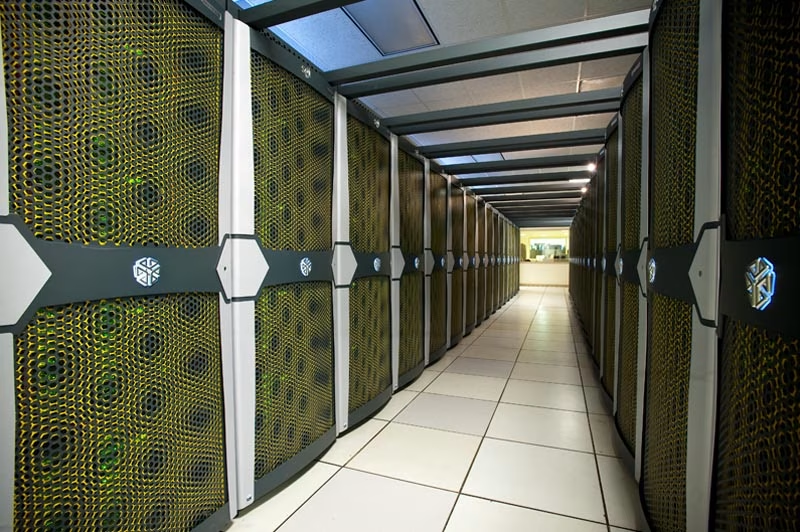
A small company cannot easily imitate a large laboratory
Training a large model can consume the budget a startup needs for a full year of operation. Renting cloud capacity helps, but price, availability, and rules for handling data create additional barriers. A public program can share infrastructure if allocation is transparent and does not benefit only a few established players.
Capacity is insufficient without good data
More processors do not automatically create a better product. A company needs lawfully obtained data, methods for measuring errors, and specialists who understand the field. Medicine, finance, and public administration also require protection for sensitive information. Infrastructure should connect technical performance with a secure data environment.
Energy determines the true cost
A data center pays for more than servers. It also needs electricity, cooling, backup systems, and network connections. Rapid growth in computation can strain infrastructure and increase environmental impact. Support should track equipment use, cooling efficiency, and whether expensive capacity is being wasted on poorly designed experiments.
Public investment needs outcome measures
The number of processors purchased is not success by itself. It matters how many research teams and companies actually use the infrastructure, whether validated products result, and whether capacity reaches beyond a few large centers. Good policy lowers a barrier to entry while leaving creators responsible for the usefulness of their solutions.