A gift that became a calendar
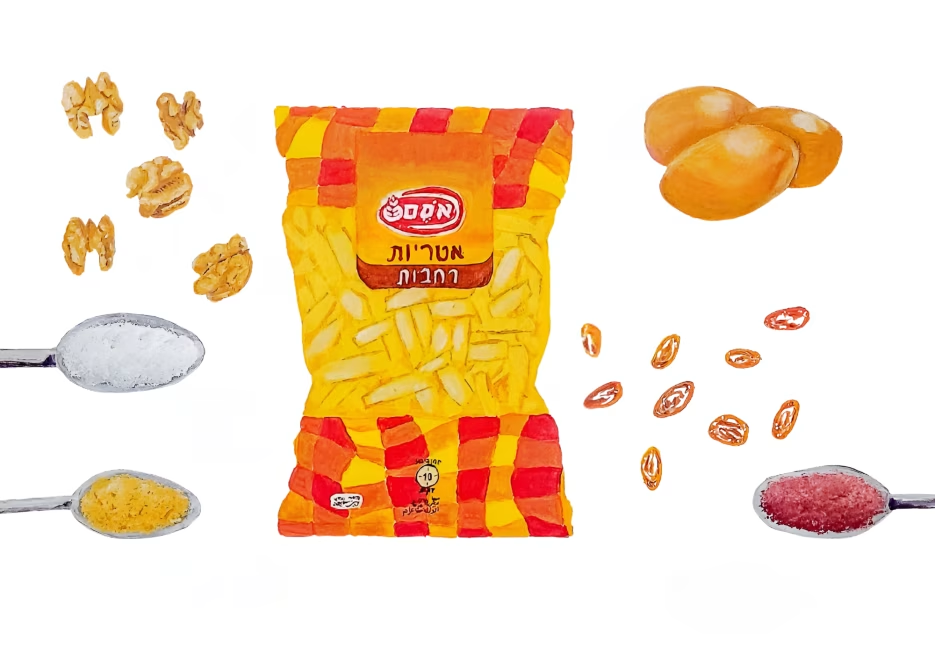
The project began not as diplomacy but as a birthday gift. Deputy ambassador Roni Abramson illustrated recipes from her mother Pnina for her 75th birthday. The collection grew to 75 recipes and the drawings took almost a year.
The embassy selected twelve recipes for its 2026 calendar. Rather than a conventional cookbook, it is an intimate view of dishes passed between generations and tied to one family's memories.
Traditions around one table
The selection includes festive and everyday foods such as challah, kneidlach, charoset, latkes and salads. It captures both religious holidays and ordinary domestic life, where cultural traditions often survive most naturally.
For Czech readers, the personal frame is especially valuable. Israeli food appears not as a single national list but as family experiences, memories and influences. The calendar is freely available on the embassy website.
A calendar is a curated selection, not a map of an entire cuisine
Twelve images and recipes can introduce holidays, memory and regional influences, but show only a part. Israeli cuisine draws on Jewish communities from Europe, North Africa, the Middle East and elsewhere alongside Arab and local traditions. A publication should name its authors, family origins and reasons for selection rather than imply a definitive national canon.
An embassy calendar also has a diplomatic role, offering an approachable subject outside political debate. That is legitimate when its origin is clear and editorial coverage adds other voices, historical context and practical testing.
A family recipe carries both memory and change
A recipe adapts with every migration to available ingredients, equipment and taste, so one exact ingredient list need not be the only authentic version. Recording who cooked it, when it was served and what changed after arrival in Israel turns food into a source for family and migration history.
Images can show hands, tables and surroundings, not only a styled plate. Credits, consent and descriptions should preserve the people behind the institutional brand, while journalism can explain regional variants sharing the same name.
A recipe needs an editorial test
A borrowed recipe may use unfamiliar measures, unavailable ingredients or assumed skills. Editors should verify quantities, temperature, timing and critical steps, distinguish essential ingredients from substitutes and note allergens and kosher status.
Holiday dishes also need an explanation of when and why they are served. A family custom should not be presented as a universal religious requirement; different communities may mark the same occasion differently.
The project could continue as a digital archive
A printed calendar expires as a tool, but its stories can remain in a digital archive with interviews, photographs, recipes and sources. Tags for holiday, region and dish type would enable comparison, while rights and contributors' names remain explicit.
For Czech audiences, shared cooking, school programmes or interviews with local families could show how history lives in everyday practices rather than stage an exotic display.
Editors could verify one story each month
The calendar naturally supports a series in which every recipe gains an interview, history and kitchen test. Each instalment can credit the original page and photograph, explain Czech substitutions and, with consent, add pronunciation and a family memory. This creates new verified work rather than simply copying the publication.
The series should represent varied communities and never claim that twelve dishes cover the country. It can compare a Czech parallel or diaspora experience without competing over the “true” version, clearly separating calendar material, interview testimony and editorial testing.
Keeping the original-language name alongside a Czech transcription preserves its family and cultural setting. Notes on meat, dairy or pareve status and on substitutions that alter kosher classification add practical accuracy to visual appeal.
Source and editorial note
This article is an editorial summary of information published by the Embassy of the State of Israel in the Czech Republic. It is neither a verbatim press release nor an editorial endorsement.
Original source date: 12 November 2025; last updated 2 December 2025.