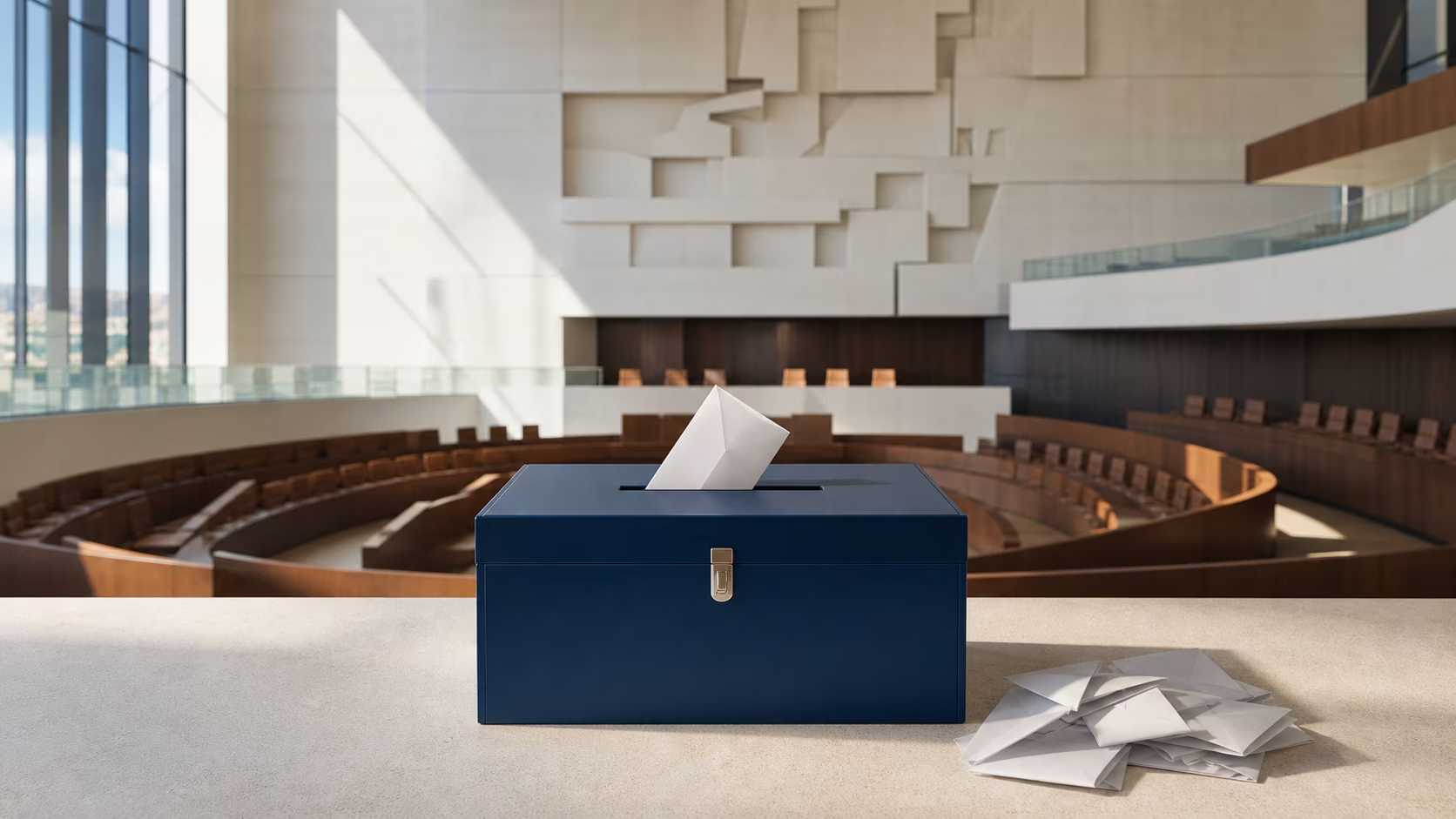
All 120 seats are at stake
Election shorthand can wrongly portray Israel as one political bloc. The state, the cabinet of the day, the 120-member Knesset, the president, courts and civil society have distinct roles, and none alone speaks for every Israeli.
Knesset elections use proportional representation, normally bringing smaller currents into parliament alongside large parties. The political scene is therefore not a two-colour contest but a meeting of many interests and identities.
A government usually depends on a coalition agreement. Winning the most votes does not itself determine the cabinet; what matters is who can command sufficient Knesset support and on what programme.
The state is not the cabinet
The government directs policy but is not synonymous with Israel. The Knesset includes coalition and opposition, while the president, courts and civic organisations have separate constitutional and public roles. Foreign debate becomes inaccurate when it collapses these layers into one.
Opinion polls need the same precision. The Israeli Democracy Index records differing trust in institutions, political divisions and distinct experiences among Jewish and Arab citizens. Such disputes are part of a society evaluating the quality of its democracy.
How we will cover the election
Jews.cz will separate verifiable facts, party platforms, coalition arithmetic and commentary. We will not assign a government's view to all Israelis or treat one demonstration or poll as the voice of the country. Every claim should identify its speaker and institutional responsibility.
Supporting Israel's right to exist in security does not dictate how Israelis should vote. One can firmly support statehood while critically assessing a government, law or decision. That distinction respects both the country and the plurality of its citizens.
The electoral threshold shapes coalition arithmetic
Seats are distributed only among lists that cross the legal threshold, so a small movement can change the strength of an entire bloc. Parties consider joint lists, separation and strategic voting. A one-seat polling difference must be read with sampling error and turnout uncertainty.
After the election, the president consults factions and asks a candidate to form a government. The largest party does not automatically supply the prime minister if someone else can gather wider support. Coalition negotiation is therefore central, and a promise to exclude a partner may matter as much as seat totals.
Security, economics and institutions overlap
The campaign is unlikely to have a single issue. Security affects budgets, labour and foreign relations; disputes over the judiciary affect investor and public trust; living costs, housing and services shape daily experience. Programmes must be compared across these connections.
A party may pair a hard security line with a different plan for ultra-Orthodox service, taxes or education. The usual left-right labels are not always enough, and Israeli politics should not be mechanically translated into Czech party categories.
Polls capture a moment, not the result
Collection dates, sample size, method and the conversion of votes into seats all matter. An extraordinary event can shift preferences within days and many voters decide late. Media should name the commissioner and method, compare agencies and avoid presenting a single reading as a trend.
Turnout assumptions for less predictable groups can distort a projection even when stated preferences were measured correctly. Seat estimates map scenarios rather than pre-empt the vote. Jews.cz will use them to explain possible coalitions while separating measurements from interpretation.
The effect on Czech relations comes after a government is formed
Czech-Israeli cooperation has an institutional foundation, but each cabinet sets priorities, ministers and diplomatic tone. After the election, foreign, economic and research portfolios matter alongside the prime minister. Some projects survive government changes; others depend on budgets and political backing.
A magazine should not tell Israelis how to vote. It should explain the system, candidates, verifiable programmes and consequences. Supporting Israel's secure existence is compatible with an open account of political competition.
Election coverage will separate data from scenarios
Before the vote, separate, dated overviews should track lists, deadlines, polls and coalition statements. Analysis can set out possible majorities but must not call them predictions. Once polls close, official results replace surveys and the government-formation process should be explained without prematurely naming a winner.
For Czech relations we will watch appointments, the adopted programme and budget. A campaign statement becomes policy only through institutional action. Links to the Knesset, election commission and programmes, together with clearly labelled commentary, respect both Israeli statehood and voters without endorsing one list.