An entrepreneur heading the economy ministry
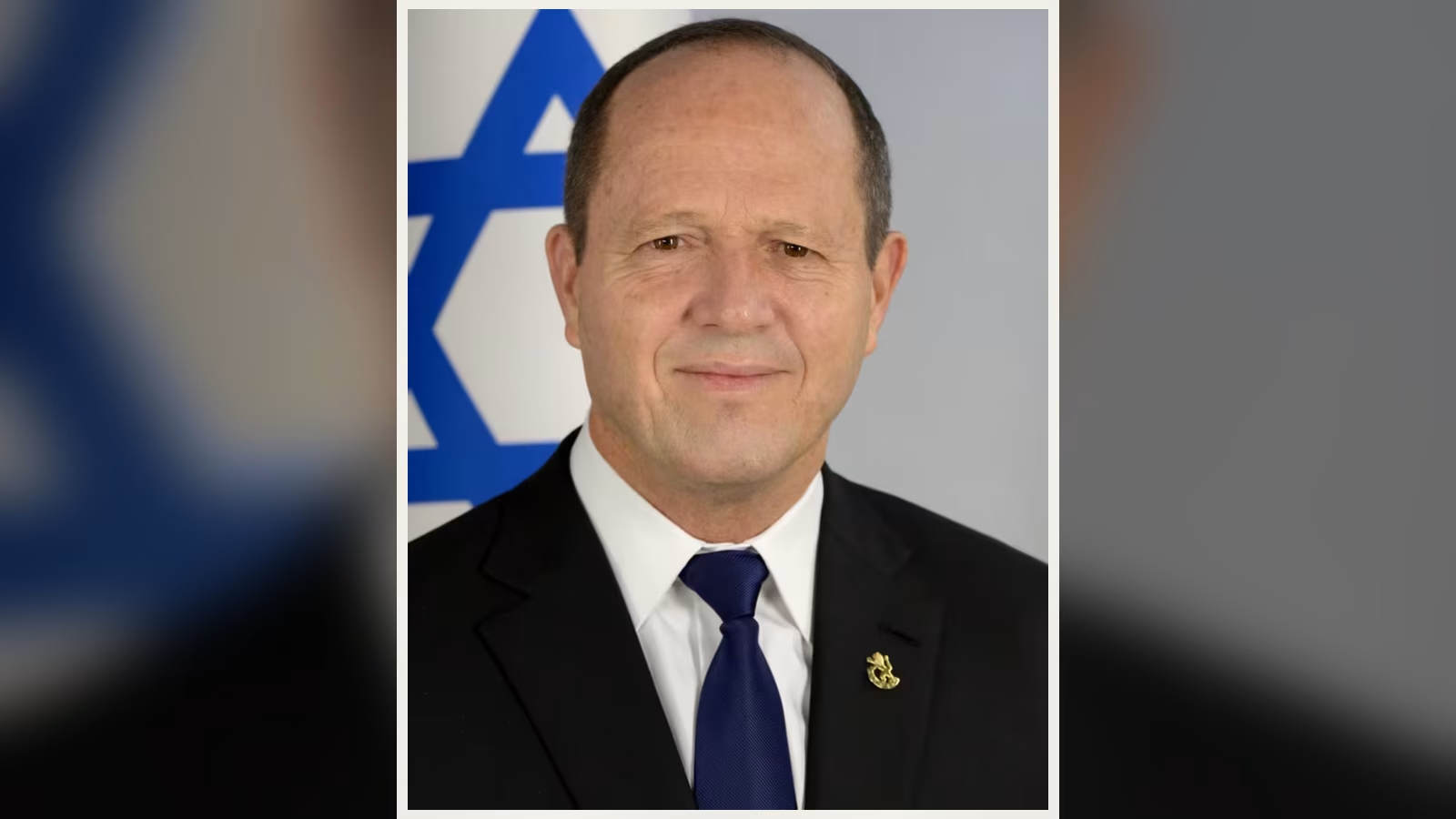
Nir Barkat has led Israel's Ministry of Economy and Industry since December 2022. Unlike many colleagues, he entered public politics with extensive experience as a technology entrepreneur and investor. He later governed Jerusalem for ten years and has served in the Knesset for Likud since 2019. His profile is therefore particularly relevant to a business magazine: it brings the worlds of startups, local government and national economic policy into one career.
Under his leadership the ministry is responsible for industrial policy, support for small and medium-sized businesses, foreign trade, consumer protection and some of the rules affecting competition. Barkat publicly uses the language of business plans, growth strategies and measurable targets. Political administration is more complex than running a company, however. Every reform must pass through legislation, the budget, professional departments and sometimes judicial review or negotiations with trade bodies.
BRM, Check Point and Israel's technology ecosystem
Barkat was born in Jerusalem in 1959, served in the military and studied computer science at the Hebrew University. In the 1980s he co-founded the BRM technology group, which later took part in early financing for cybersecurity company Check Point and other projects. He gained direct experience of turning a technical idea into an export business, the role of venture capital and why a startup needs access to global markets.
This background shapes his view of the state as a creator of conditions, not the sole source of innovation. Israeli high-tech rests on universities, military research, immigration, private capital and connections with the United States and Europe. Government can fund infrastructure, reduce regulatory obstacles and support exports, but cannot order a successful product into existence. Barkat therefore emphasises competition, entrepreneurship and links between regional talent, investors and international customers.
Ten years as mayor of Jerusalem
Barkat served as mayor of Jerusalem from 2008 to 2018. The city is a complex administrative environment with a fast-growing population, diverse communities, security costs and strong reliance on the state. Barkat promoted tourism, cultural events, technology entrepreneurship and the development of municipal services. Supporters praised his managerial approach and efforts to attract private investment; critics pointed to persistent social inequalities and political tension.
Mayoral experience is practical for an economy ministry. An industrial zone, transport link or education programme comes from cooperation among government, municipalities and the private sector. National policy may offer a grant, but land, permits and the local workforce also determine the actual location. Barkat's emphasis on regional clusters follows the idea that cities should build their own specialisms rather than mechanically copying Tel Aviv's technology centre.
Import reforms and competition
One of the most visible themes of his ministerial term has been import reform under the slogan that products accepted in Europe or the United States should also be usable in Israel. The aim is to let selected goods rely on foreign regulation and reduce duplicate testing. The ministry expects a wider range, new importers and downward pressure on prices. In July 2026 the Knesset completed another part of the US regulatory route.
The reform's success cannot be measured only by the number of amended provisions. What matters is how many companies actually use the new system, whether inspections remain safe and predictable and whether savings reach consumers. Domestic producers may argue that they face different costs from importers, while consumer groups will monitor price and quality. Barkat's agenda therefore illustrates the classic tension between open trade, protection of domestic industry, regulation and efforts to reduce the high cost of living.
Exports, investment and economic diplomacy
The Economy Ministry runs a network of foreign trade missions, supports companies at trade fairs and helps them enter new markets. This work overlaps with the Foreign Ministry and Israeli embassies but has a more specific commercial focus. Barkat takes part in meetings with the OECD, foreign ministers and business delegations, where he presents Israeli technologies, discusses regulatory barriers and seeks opportunities for investment and industrial cooperation.
Cybersecurity, medical technology, water, agriculture, defence and applied research are relevant to Czechia. A political visit alone does not guarantee business. A company needs a partner, suitable distribution, regulatory assessment and a realistic pricing model. The ministry can open doors or help resolve a systemic obstacle, but it does not replace commercial preparation. The Israel Export Institute, Israel Innovation Authority and sector regulators should therefore also be monitored.
What to expect from Barkat's agenda
Barkat seeks to connect the image of a startup nation with broader industrial policy. Israel needs not only new software companies but also more productive manufacturing, skilled workers, more affordable imports and economic development outside the centre. The ministry therefore works with grants for advanced manufacturing, programmes for small businesses and foreign-trade support. Results depend on the budget, coordination with the Finance Ministry and the ability to turn a political plan into clear rules.
For Czech readers, Barkat matters most as the administrator of institutions that can make entry into the Israeli market easier or harder. His entrepreneurial past offers useful context but should not be confused with automatic support for every business interest. The official links in this article make it possible to verify the ministry's current powers. The editorial profile adds wider context and identifies the decisions, departments and practical indicators to watch when assessing economic policy.
Sources and editorial note
The Jews.cz editorial team prepared this article from the public materials below. Claims made by a company or institution are explicitly distinguished from independently documented facts and editorial interpretation.