A whole cut is harder to make than a burger
Ground plant-based meat can be made by blending proteins, fats, binders and flavourings into a relatively uniform mass. A steak has directional fibres, unevenly distributed fat, resistance when cut and varying juiciness. Redefine Meat therefore describes a Plant-Based Tissue Engineering approach in which it models individual functional components and assembles them into a structure. The company uses digital manufacturing and several material streams to imitate the behaviour of tissue, not only its flavour.
The term 3D printing is memorable but does not describe the whole production process. Plant-protein recipes, the fat phase, water binding, structural orientation and thermal stability all matter. A product must pass through an industrial line, freezing, distribution and a kitchen while continuing to behave predictably. Demonstrating a freshly prepared piece in a laboratory is a different task from supplying thousands of portions to restaurants and retailers.
Every layer performs a different sensory function
The muscle component creates fibres and protein resistance, fat carries flavour and melts, connective material affects chewing, and juices release aromas. If one layer is poorly calibrated, the product may be dry, rubbery or fall apart during cooking. Multicomponent assembly makes it possible to change the cut without developing an entirely new raw material. The same technology platform can produce a flank steak, a pulled product or another profile for different cuisines.
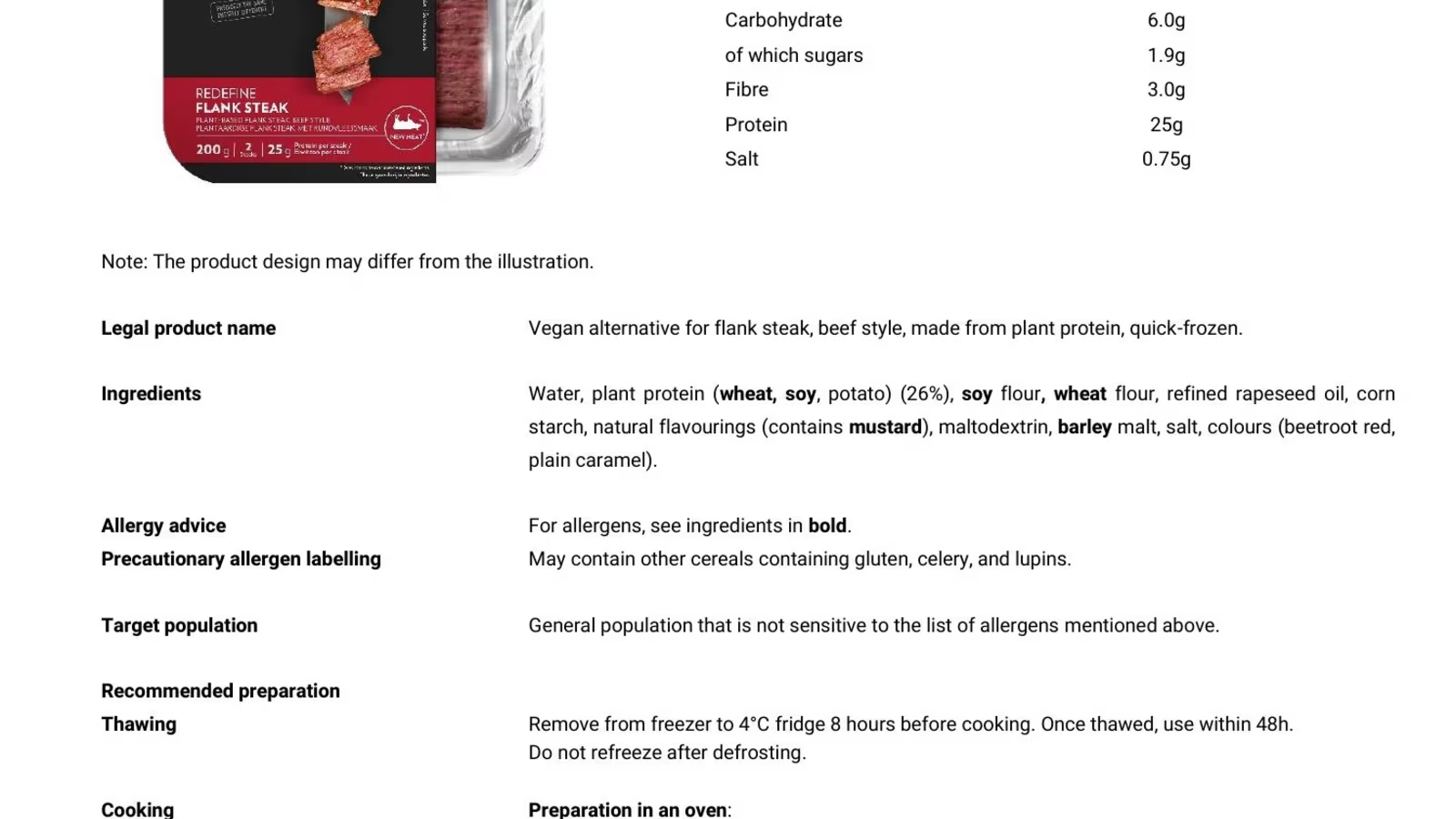
Production must cope with the natural variability of plant ingredients. Protein from peas, soy, wheat or another crop has a different flavour, colour and function. Customers need an exact allergen list and nutritional information. Similarity to meat does not mean identical nutrition; protein, salt, fat and micronutrients must be assessed for the specific product. Texture technology must not obscure the label.
The chef is part of the development loop
Redefine Meat began with a strong focus on food service, where chefs could test different cuts and comment on behaviour in the pan. A restaurant provides a controlled first use and can explain the new category to diners. It is also a demanding test of consistency: a kitchen needs the same time, yield and result from every box. A product that requires a special expert procedure is difficult to scale into a chain or a home.
Retail transfers responsibility to the consumer. The package must provide clear instructions and the product must work in an ordinary pan or on a grill. Frozen distribution can stabilise quality but adds energy use and logistics. The company has introduced flank steak to European retail and has been adapting its burgers and minced products. Commercial success will be judged by repeat sales and availability beyond a handful of well-known restaurants.
The plant-based meat category is becoming more realistic
After rapid growth in alternative proteins, some countries saw falling sales, price pressure and criticism of taste or processing. Redefine Meat argues that further growth requires a better eating experience, not only a moral or environmental message. A whole cut may appeal to a flexitarian who does not want an ordinary burger but decides on taste and price. Technological complexity must nevertheless deliver value that customers will pay for.
The company competes not only with meat but also with simple pulse-based meals and other plant brands. Its portfolio must balance a premium steak with higher-volume minced categories. The cost of specialised production may be acceptable in restaurants but less so in price-sensitive retail. Line utilisation, margins and distributors in individual countries will matter. An impressive texture is the beginning of a commercial offer, not its entire economics.
Sustainability depends on the recipe and production
A plant-based product generally needs less land and may have lower emissions than beef, but the precise result depends on crops, processing, energy and refrigeration. Multilayer production and frozen distribution add steps. Redefine Meat should publish a life-cycle assessment for a specific product and market. A general comparison with the best or worst form of livestock farming can change the percentage substantially and is no substitute for transparent methodology.
Nutritional and environmental debates should not be merged. A product may have a low climate footprint and still contain a lot of salt, or vice versa. Consumers need both kinds of information separately. Processing is not automatically negative; it can create a safe and functional food. The relevant questions concern composition, portions and the role in a diet. Accurate communication will help the category more than claims that the new steak is better in every respect.
The opportunity lies in food-industry partnerships
The Czech market has strong restaurants, food processing and retail, but it is price-sensitive. A partner can test the product in a restaurant, a local recipe or a distribution channel and measure acceptance without a large ideological framework. Stable supply, Czech labelling, allergen information and work with chefs are essential. Manufacturing cooperation would require a licence, equipment and control of raw materials, not simply the import of a 3D printer.
Redefine Meat shows that product innovation in Israel need not be software. The company combines materials engineering, digital manufacturing and culinary development. Its success will be decided on the plate and in its accounts: whether the structure actually brings customers back and whether it can be produced at a competitive price. Future coverage should follow concrete European sales, recipe changes and capacity rather than repeat a general fascination with printing food.
Sources and editorial note
This article was prepared by the Jews.cz editorial team from the public materials listed below. Statements by a company or institution are explicitly distinguished from independently documented facts and editorial interpretation.