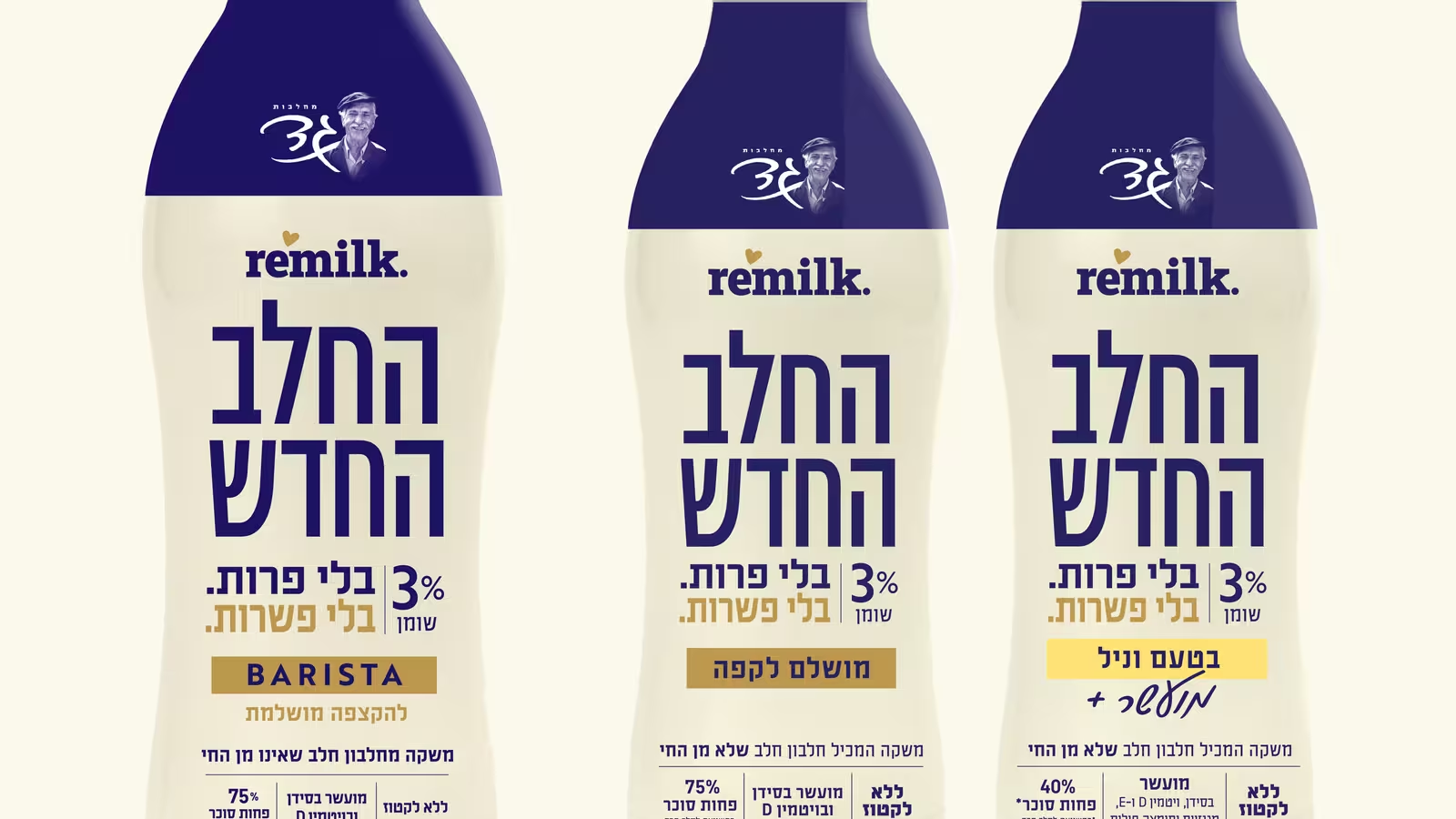
The first product targets cafés and shops
Remilk and Israel's Gad Dairies announced The New Milk in November 2025. A barista version went first to hospitality venues, with retail formats to follow. The partnership combines Remilk's biotechnology with an established dairy's brand, formulation, production and distribution,essential steps in turning a laboratory protein into a stable, appealing and affordable refrigerated product.
The companies claim a milk-like taste and performance, good foam, added calcium and vitamins, no lactose or cholesterol and less sugar. Those claims apply to a specific recipe and serving. The finished drink also includes water, fats, minerals and structural ingredients, so consumers should read its label just as they would for dairy or plant alternatives.
A microorganism makes the milk protein
Precision fermentation equips a microorganism with genetic instructions to produce a selected protein, which is then separated and purified. Remilk's whey protein is molecularly equivalent to its dairy counterpart and can provide solubility and foaming that some plant proteins struggle to reproduce.
“Cow-free” describes the production route, not the absence of a milk molecule. The protein can cause a reaction in people with milk-protein allergies and must be labelled accordingly. Lactose-free does not mean allergen-free; health decisions depend on composition, not the picture on the package.
Pareve status creates a distinctive Israeli market
The New Milk is certified pareve, allowing it under the relevant kosher supervision to accompany a meat meal. This is a meaningful advantage in Israel. Pareve is a religious classification of process and ingredients, while allergen labelling follows the biological protein: a product can therefore be ritually non-dairy yet contain a milk allergen.
This dual status demands exceptionally clear labels and hospitality training. A barista must know that the drink may suit a kosher meal but is unsafe for someone with an allergy. Export markets may also use different legal product names and kosher certifications.
Taste and price will matter more than laboratory novelty
People buy milk drinks repeatedly and notice taste, foam, colour and price. Remilk says its protein offers a more traditional experience than plant drinks, but independent sensory testing and sales will show whether it works in coffee, cooking and on its own. Curiosity may prompt a first taste; repeat purchases create a market.
Precision-fermentation costs depend on yield, feedstock, energy, purification and capacity. Regulatory approvals are only part of the path to stable production. Gad can optimise formulation and distribution, while wider success will be measured by outlets, volumes and expansion into cheese or other categories.
Environmental benefits require factory data
Fermentation may reduce land use, herds and methane, but consumes sugar or another carbon source, energy for sterile tanks and purification resources. The outcome depends on scale and the power mix. Company estimates should be replaced by lifecycle data from an operating line and compared for equivalent nutritional function, not simply by litre.
Supply may also be more stable where feed or dairy ingredients are imported, though fermentation plants need their own inputs and skilled operation. The technology changes an agricultural supply chain into an industrial one rather than eliminating it. Transparent figures for sugar, water, energy and waste matter.
Entering Europe will take more than translating the carton
A fermentation-made milk protein and the final drink need European regulatory assessment and compliant labelling. A Czech importer would have to address allergens, nutrition claims, kosher certification, cold logistics and consumer explanation. An Israeli launch proves marketability there, not automatic readiness for every country; local production may be more practical than shipping the finished drink.
The New Milk is compelling because biotechnology, a traditional dairy and kosher rules meet in one product. It is neither the end of cow's milk nor a mere laboratory curiosity. Taste, price, safe labelling and capacity will determine its place, with sales and production data providing the next evidence.
Sources and editorial note
The Jews.cz editorial team prepared this article from the public materials listed below. Company or institutional claims are distinguished from independently documented facts and editorial interpretation.