A smaller cabinet completes a modular range
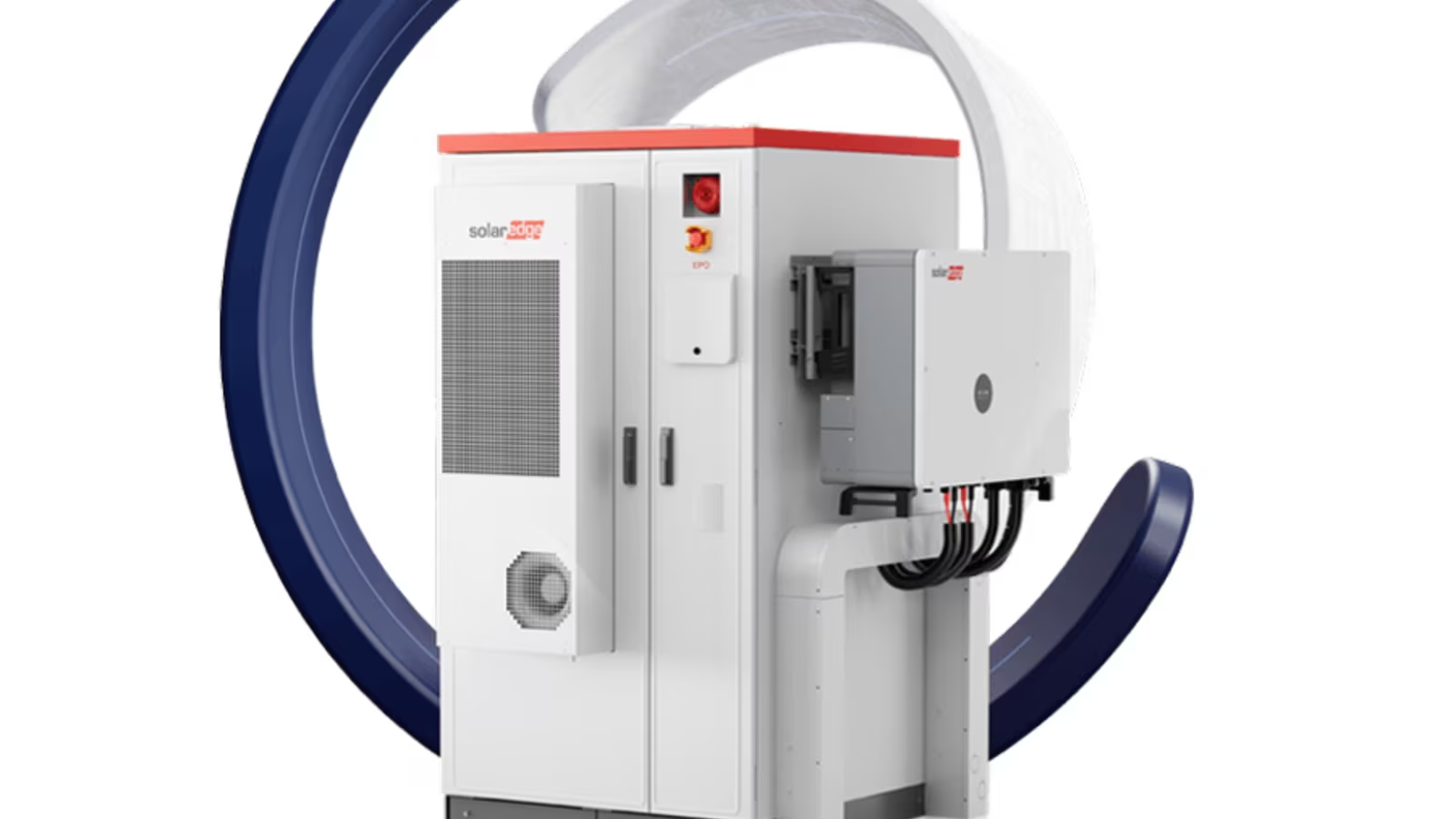
SolarEdge launched the 107 kWh CSS-OD 107 at Intersolar Europe in June 2026 with 49.9 or 29.9 kW inverter options, complementing a 197 kWh model. The preassembled cabinet can be indoor or outdoor and is backup-ready following the relevant update, with availability varying by country and certification.
Capacity measures stored energy and power its delivery rate. The ratio suits multi-hour energy shifting and peak shaving rather than very short high-power support. Designers must use usable capacity, efficiency, temperature and backup reserve rather than assume the nameplate figure always reaches the load.
Software decides when the battery charges
SolarEdge links storage, PV and ONE for C&I to maximise self-consumption, reduce peaks, respond to tariffs and respect import/export limits. The same battery can produce very different economics depending on signals and algorithms.
An integrated ecosystem simplifies installation and service while increasing dependence on one vendor. Customers need data export, interfaces, update terms and safe critical operation without the cloud because control software must last for the investment's lifetime.
German demand provided the first market signal
SolarEdge previously reported more than 150 orders representing over 15 MWh in Germany and initial operating installations. This shows installer interest, not years of reliability and savings. The 107 kWh variant may fit smaller operations more closely.
German prices and grid rules differ from Czech ones. A Czech model must use the actual energy, capacity, distribution and peak contract. Backup and flexibility add value, but services cannot always be stacked when they need the same capacity simultaneously.
Safety works in several layers
Commercial lithium-ion storage concentrates energy. SolarEdge describes cell, module, cluster and cabinet protection, smoke and gas detection, electrical safety and suppression. The site still needs spacing, fire access, heat management and permits; a preassembled cabinet does not replace fire and building design.
Warranty terms for temperature, depth of discharge, cycles and residual capacity must be read carefully. Aggressive optimisation increases wear, so controls should compare immediate savings with degradation and reserve for replacement and recycling.
Backup needs selected loads
Backup-ready does not mean an entire site automatically remains powered. Designers must define critical circuits, startup current, duration and safe grid separation. A 107 kWh battery may support a small operation for hours or a large one briefly, only if it retains energy at the outage.
Controls balance backup reserve with economic use according to the value of continuity. Customers set priorities and regularly test island operation; backup is an operating service rather than a catalogue label.
A project begins with 15-minute data
A business should analyse at least a year of load, PV output, peaks and tariffs and simulate capacities, power, strategies and degradation. After installation, actual results should be compared with the model and controls adjusted.
CSS-OD 107 may suit Czech firms with PV seeking higher self-consumption or controlled demand, but it is not a universal answer to high electricity prices. Load profile, safety, service and software determine value; installed MWh, availability and long-term savings will provide better evidence than early orders.
Sources and editorial note
The Jews.cz editorial team prepared this article from the public materials below, distinguishing company claims, independently documented facts and editorial interpretation.