The artist joined modern sculpture with long memory
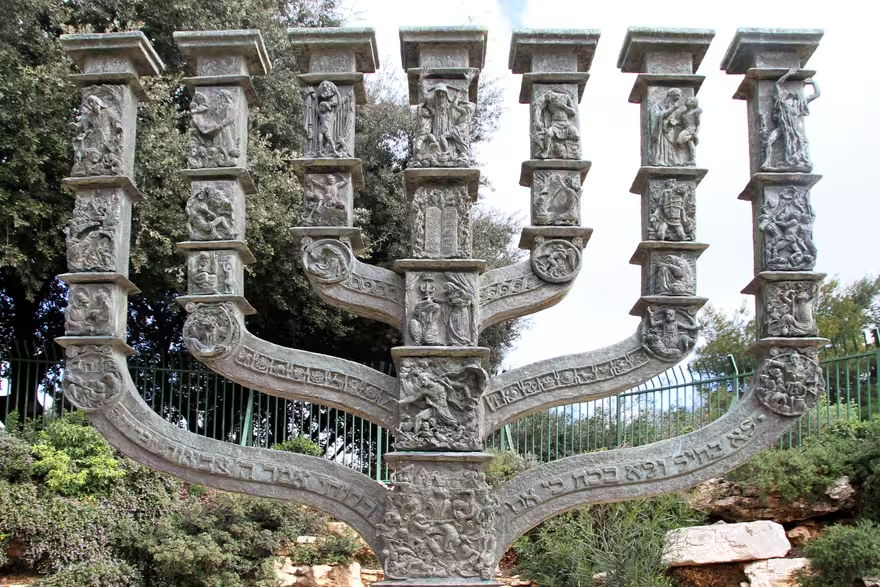
Benno Elkan was born in Germany in 1877 and left for Britain after the Nazis came to power in 1933. He worked on the Menorah for several years. His purpose was not merely to enlarge a ritual object. Every part became a surface for people, events, and ideas that he believed had shaped Jewish history.
The reliefs are not a simple timeline
Viewers encounter biblical scenes, rabbinic scholars, exile, persecution, modern Zionism, and renewed statehood. Some subjects stand together by theme rather than exact date. Reading the work therefore requires movement around the sculpture. The Menorah offers a selection and an interpretation of history, not a neutral list.
The gift originated in Britain
Lord Edwin Samuel supported the initiative, and British donors financed it. The Menorah reached Israel in 1956 and moved to its present location in 1966 after the new Knesset building was completed. The journey of the object connects European emigration, British Jewry, and the institutions of the young state.
Public art invites questions
A national monument always chooses what to show and what to leave outside the frame. With the Menorah it is useful to examine not only familiar figures but also the arrangement of faith, suffering, learning, and political renewal. The work opens a discussion about how a society narrates its own past.