A mahzor serves sacred time
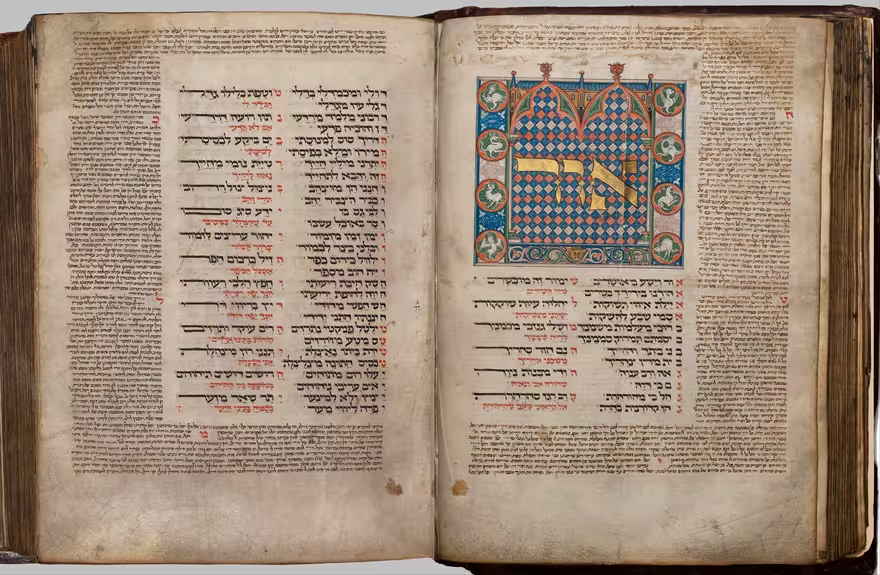
Unlike an ordinary siddur, a mahzor principally contains prayers for particular festivals and fasts. The Nuremberg manuscript preserves local liturgical practice and poetic piyyutim. Its scale shows why a medieval community needed to safeguard texts used only on certain days but carrying great communal importance.
Size changed the way it was used
This was not a small personal object kept in a pocket. Large parchment leaves and dense columns suit public reading and the work of a prayer leader. Marginal commentary helped explain language and custom. A single volume could combine a practical tool, learned interpretation, and a representation of the community.
The image is more than decoration
Geometric patterns, colored initials, and figures guide the eye and mark transitions in the text. The decoration reveals contact between Jewish scribes and patrons and the surrounding visual culture. At the same time the manuscript creates its own way of connecting celebration, memory, and the written Hebrew word.
Digital copies transform access
A rare manuscript must be protected from light, touch, and changing humidity. High quality digitization lets researchers and the public inspect detail without harming the original. It cannot replace the material experience of parchment and the scale of the book, but it opens the pages to people who could not otherwise see them.