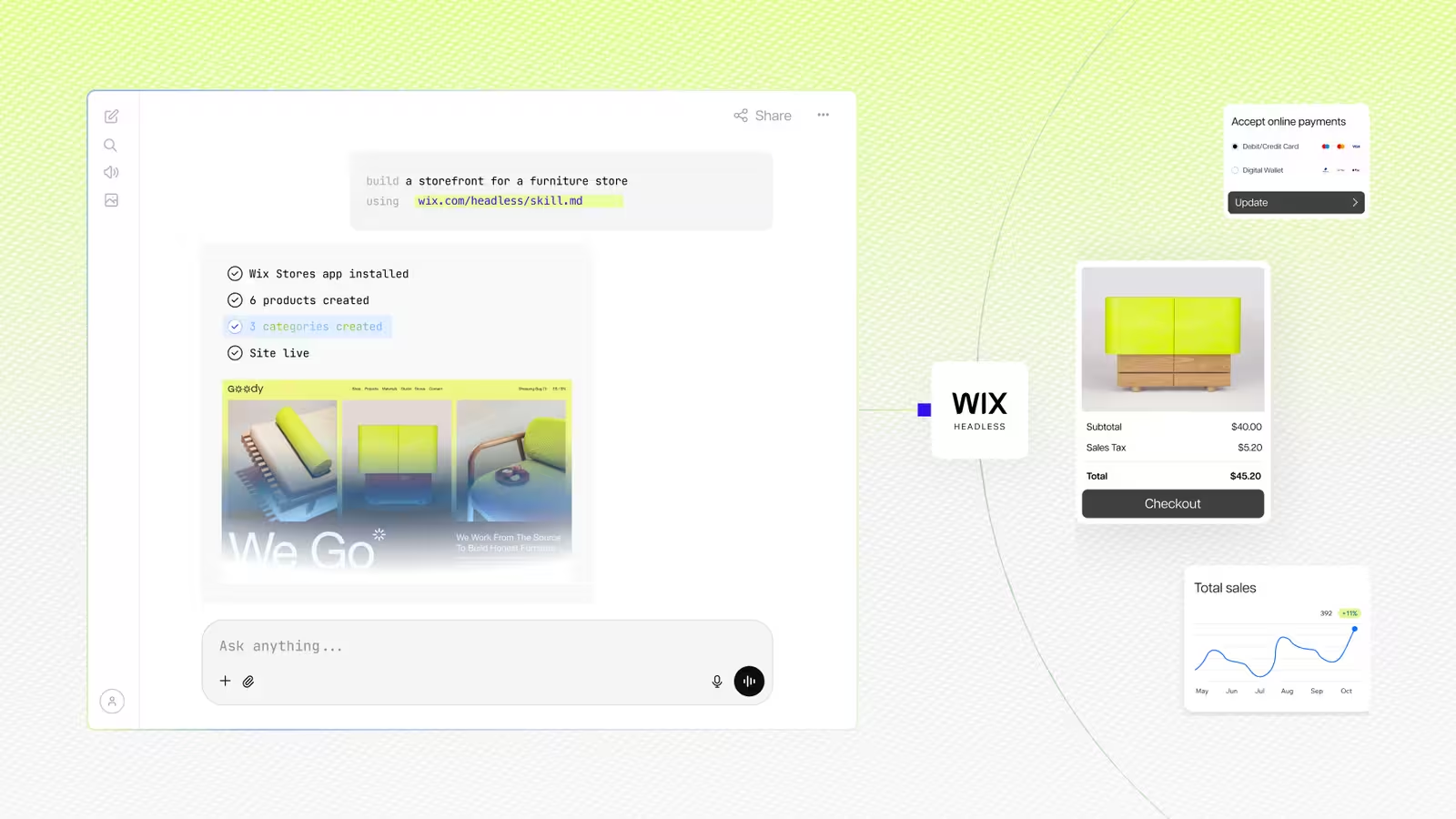
The interface can be built elsewhere while operations remain on Wix
In July 2026 Wix expanded Headless for tools where developers use natural language and generated code. A team can design its own web or app in a preferred framework and connect catalogues, orders, bookings, content or memberships through APIs without the standard visual editor.
Headless is not new, but AI lowers the time and expertise for a first interface. That increases demand for ready backends because carts, payments and bookings cannot safely be improvised at the same speed. Appearance gets cheaper while reliable operations, identity and data remain difficult.
Headless brings freedom and more responsibility
A standard platform keeps appearance, data and functions together. Headless allows custom technology, several channels and precise experience control, with one catalogue serving web, mobile or a terminal. This suits brands that have outgrown templates but not want to rebuild every operational system.
Splitting layers adds integration, monitoring and compatibility ownership. Failures may sit in interface, network, authentication or backend. Teams must manage API versions, tests and credentials; AI can write a call but not decide acceptable failures or audit requirements.
The contract between layers matters most
A good API specifies data, permissions, limits and failure behaviour. Carts, the last booking place, interrupted payment and webhooks need concurrency, retries and state handling to prevent duplicate orders and lost confirmations.
Wix supplies SDKs and connectors for AI development tools. Safe types, authentication, patterns, documentation, sandboxes and observability matter more than a demonstration snippet that hides production complexity.
Business data remain strategic
Wix Headless stores important customer and transaction data in a third-party platform. Export, deletion, backup, exit, country availability, payment methods and privacy must be clear. A custom interface does not remove the operator's legal responsibility.
Prices, stock and availability must remain consistent across channels. Business rules belong in one canonical layer, while each interface shows data and submits intent rather than duplicating logic.
AI changes development economics, not the need for testing
Generated code makes prototypes cheap, but production still needs security review, accessibility, performance, analytics, tests and maintenance. Faster creation makes automated controls and clear architecture more important. Headless can assume part of the risk only across an explicit boundary.
Agencies can build custom interfaces over managed commerce, focusing on brand and journey while explaining recurring cost and lock-in. Prompting is easy to copy; reliable business-flow design and accountability are not.
How to assess the connection
A pilot should cover an end-to-end booking from search to confirmation and cancellation, measuring development time, manual work, failures and documentation. Test recovery, concurrency and admin-side data changes before comparing with the standard editor or another backend.
Wix is trying to become infrastructure even for apps that do not look like Wix. This expands its market and exposes it to headless commerce and backend-as-a-service competition where APIs, price and developer trust decide. It is a product shift rather than merely an AI label.
Sources and editorial note
The Jews.cz editorial team prepared this article from the public materials below, distinguishing company claims, independently documented facts and editorial interpretation.