A building dating from 1872
The Žatec synagogue was consecrated in 1872 and is the second largest in Bohemia after the Great Synagogue in Plzeň. Its appearance recalls the time when the Jewish community was a natural part of the town's economic and social life.
The building was damaged during the November pogrom of 1938. In later decades it served, among other things, as a hospital, a marketplace and a warehouse. These changing uses kept the building physically present, but its original purpose and the memory of the community remained in the background for a long time.
A restoration costing almost CZK 56 million
Private owner Daniel Černý bought the synagogue in 2012, and extensive restoration began seven years later. Published figures put the cost close to CZK 56 million. The project also included the neighbouring rabbinical building.
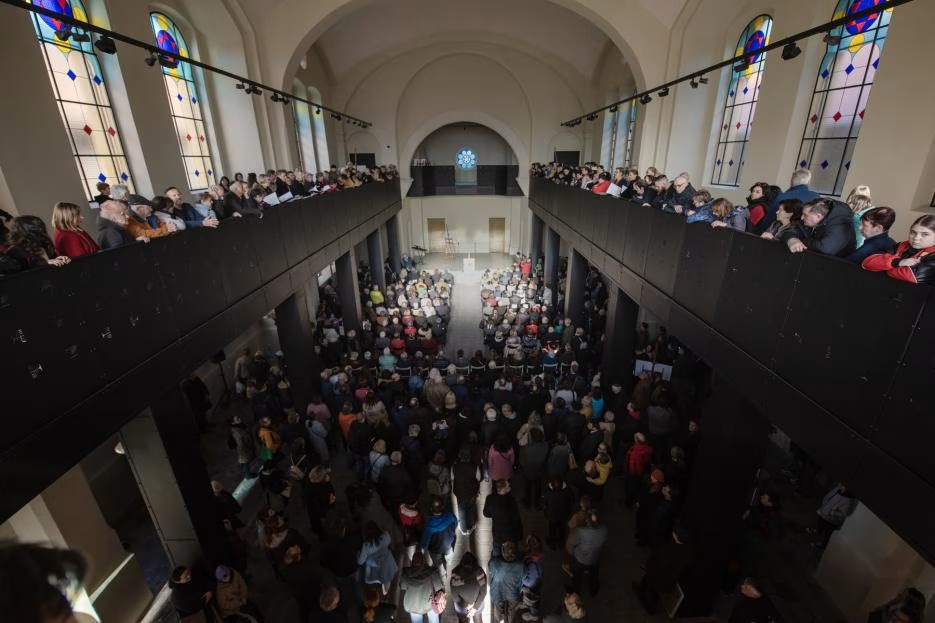
After reopening in 2024, the project received a Patrimonium pro futuro award. The restored complex can now serve as a cultural venue and as a place that introduces visitors to the history of Žatec's Jews without reducing them solely to the period of persecution.
The synagogue had both religious and communal functions
A synagogue is a place of prayer, study and gathering, although its operation varies with the size and tradition of a community. The Žatec building now functions in a different communal environment from the one that existed before the local Jewish community disappeared. Restoration cannot simply return the original daily life. It can preserve the architecture, explain religious elements and create a dignified space for memory, culture and occasional services.
Visitors need to distinguish the bimah, Torah ark, galleries and other elements according to what genuinely survived. Reconstructed furnishings should be identified as such. Interpretation should describe the local form of worship instead of imposing one general image on every synagogue. Consultation with a Jewish community safeguards the religious meaning of the space even when it operates as a cultural venue.
Decades of other uses left their layers
After losing its original function, the building underwent alterations that may be historically problematic but are themselves part of its story. A restorer must decide which layer to remove, which to acknowledge and where evidence for reconstruction is missing. Documentation before, during and after the work enables professional review and supports future maintenance. A restoration should not create the illusion of uninterrupted continuity.
Post-war uses must be set within the fate of Žatec's Jews, the Holocaust, confiscations and changes in the town. Architecture without people would tell an incomplete story. Names, photographs and sources can show religious, commercial and civic life before the community was destroyed. Families' privacy must be respected, and uncertainty identified wherever the archive does not give a clear answer.
Cultural use must respect the character of the place
A concert, exhibition or conference can make the building accessible and help finance its operation. Programming must nevertheless respect religious symbols, commemoration and the owner's rules. Not every commercial event suits such a place. A clear programme and operating code prevent the synagogue from becoming a neutral hall for hire with no relationship to its own history.
Access for schools and local residents is as important as the tourist offer. Guided tours require trained guides and materials at several levels. A programme can explain Judaism without exoticising it and connect it with the town's history. A good outcome is a visitor who understands not only the architectural style but also the people and practices for whom the building was created.
Opening is the start of long-term stewardship
After an expensive restoration come heating, humidity control, insurance, staff and small repairs. The operating model should combine public support, admission fees, donations and suitable events without allowing revenue to undermine the mission. Regular reports on condition and attendance can show whether the investment is being protected. A monument needs a maintenance reserve, not another rescue restoration after a few years.
The embassy report from March 2024 documents the reopening and diplomatic participation. The manager, heritage specialists and local sources add other perspectives. This article retains the event's original date and does not present it as current. Practical visitor information should be checked separately. That keeps the record historically accurate and useful to people wishing to visit the synagogue today.
A year of operation will show whether the building has returned to the town
After restoration, attendance, school programmes, local participation and technical condition should all be monitored. Large tourist numbers may help finance the site but do not by themselves show that Žatec residents regard it as part of their own history. Conversations with guides, schools and the Jewish community can reveal how the interpretation works and where context is missing. Accessibility for people with limited mobility and clear rules for cultural events are also important.
Restoration documentation should be publicly available and distinguish original from added elements. If a new archival source appears, the exhibition can incorporate it without pretending it was known when the site opened. Jews.cz retains the embassy report as one source and adds the views of managers and heritage specialists. Regular checks of practical details will help readers visit, while March 2024 remains the accurate date of the reopening.
A long-term programme can connect the synagogue with other Jewish sites in the region and create a route that does not stop at one building. Every point needs its own historical context and must not serve merely as tourism scenery. Cooperation among schools, museums and tourism bodies can attract visitors while preserving expert control over interpretation.
Source and editorial note
This text is an editorial summary of information published by the Embassy of the State of Israel in the Czech Republic. It is neither a verbatim press release nor an expression of the editorial team's position.
Date of the original source: The original report was published on 19 March 2024 and last updated on 21 May 2024.