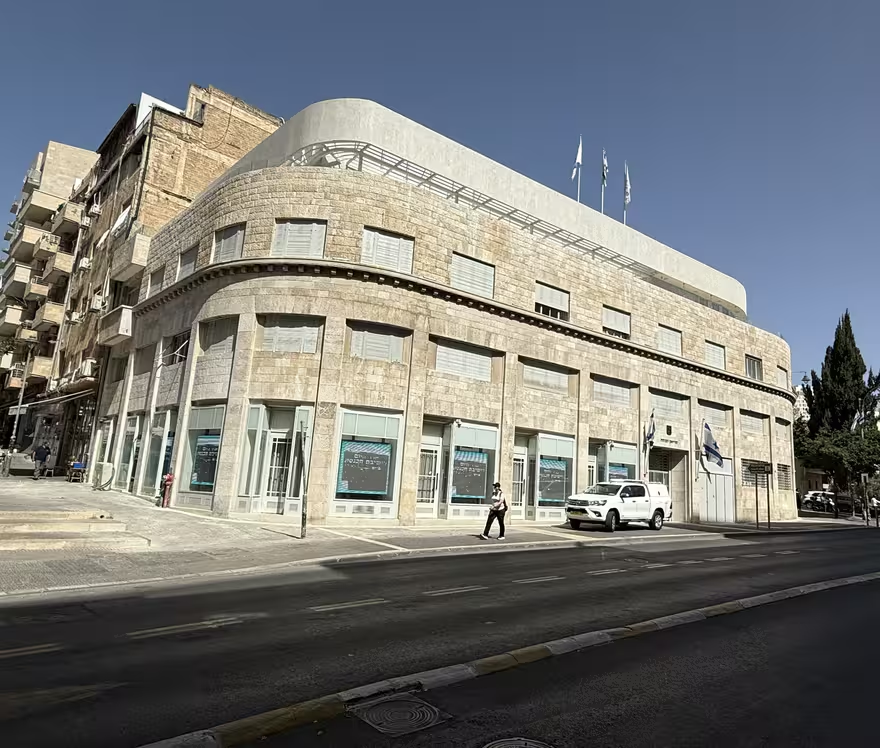
Parliament moved into a civilian building
The first Knesset sessions took place elsewhere, but Beit Frumin became its permanent home for sixteen years. The first through sixth Knessets worked here. The building was not designed as a monumental parliament. Legislators, journalists, and the public met within the limitations of an ordinary urban structure.
Durable institutions formed inside
The compact chamber hosted debates on budgets, laws, immigration, and relations between government and opposition. The young state was also confronting housing, security, and the integration of people from many countries. The building shows that institutions do not emerge at once. Repeated debates, conflicts, and tested rules give them shape.
A new home changed the image of parliament
The Knesset moved to its present Givat Ram building in 1966. It gained a ceremonial complex, a larger chamber, and a clearly defined state precinct. Beit Frumin remained evidence of a period when parliament worked directly among shops, streets, and the daily life of the city.
The museum uses an authentic place
Restoration preserved the appearance of the former parliament and added contemporary exhibition systems. The value lies in more than a collection of objects. Visitors stand in a building where decisions were made. An authentic setting can show that democracy is not an abstract symbol but a way people argue and accept responsibility in a real room.