The relationship began before Israel was established
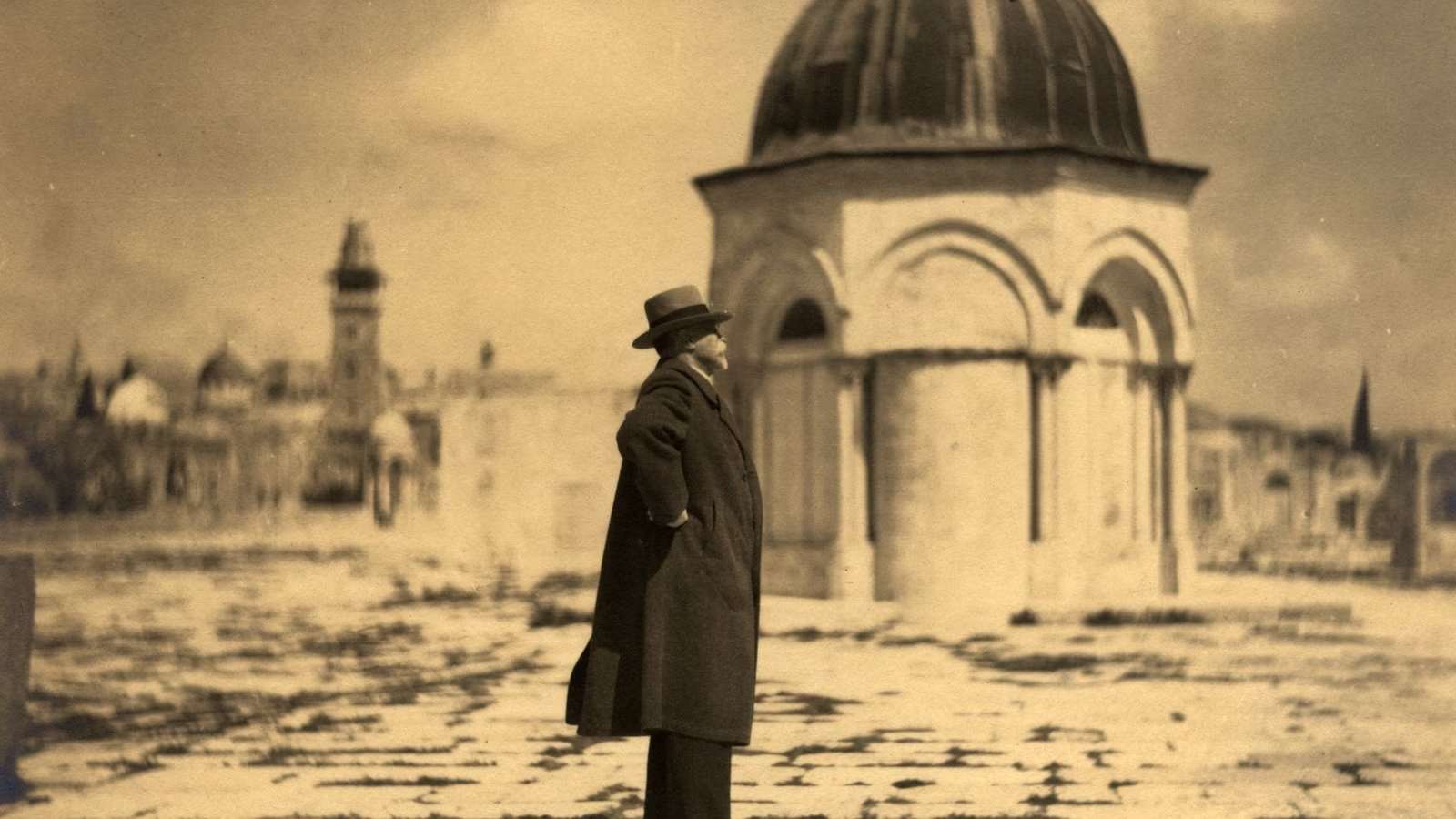
Tomáš Garrigue Masaryk visited British Mandatory Palestine in spring 1927. It was the first official visit by a head of state to the territory and a notable gesture towards local Jewish communities. The pre-war context also includes World Zionist Organization congresses in Karlovy Vary in 1921 and 1923 and in Prague in 1933.
Czechoslovakia recognised the State of Israel on 19 May 1948, five days after the declaration of independence. Diplomatic relations began on 3 July. Material assistance, military training and supplies from Czechoslovakia had a practical significance for the new state that went beyond normal diplomatic support.
The Cold War severed the relationship
Initial closeness was followed by reversal. Communist Czechoslovakia aligned foreign policy with the Soviet bloc, while domestic antisemitic repression also affected its approach to Israel. Diplomatic relations were severed in June 1967 after the Six-Day War.
Contacts resumed on 9 February 1990 after the Communist regime fell. Václav Havel visited Israel that April and became the first senior representative of a former Soviet-bloc country to do so. The independent Czech Republic established diplomatic relations with Israel on 1 January 1993.
Today's relationship rests on several pillars
The current partnership is more than a sum of political visits. It rests on economic exchange, technological and academic cooperation, cultural projects, links among local authorities and the work of non-profit institutions. This network makes it more resilient than a one-off political statement.
Historical closeness must not replace precision. Friendship with Israel does not require concealing disputes within its society or approving every act of a particular government. A strong relationship can combine security solidarity, commercial interest and factual criticism, as other long-term partnerships do.
1948 had both diplomatic and material dimensions
Recognition is a legal and political act, but Czechoslovak assistance also included supplies and training. Their scale and motives should be described from archives rather than a memorial slogan. At the same time, the Communist regime was consolidating in Europe and foreign policy rapidly changed direction. The tension between concrete assistance and the later reversal gives the beginning of the relationship its historical depth.
Individual participants had different roles and later fates. Complete coverage should follow pilots, instructors, diplomats and institutions as well as government decisions. Material aid cannot be removed from the war context or domestic Czechoslovak politics. Precision does not diminish its importance; it protects it from a myth that could be used without regard for facts.
Severed relations meant more than an empty embassy
After 1967 the official channel disappeared and Czechoslovakia adopted the Soviet framing of the conflict. The effect appeared in media, education, travel and restricted institutional contacts and followed earlier political trials and state antisemitism. This history therefore belongs to Czechoslovakia's history of unfreedom, not only to foreign policy.
Personal, exile or cultural links may have continued despite the state line, beyond the reach of official chronologies. Finding them requires archives and oral history. Distinguishing a state's position from residents' experience is the same rule applied to Israel today. The regime did not speak for every citizen, even though it controlled institutions and public language.
Restoration after 1990 was swift; rebuilding took time
Renewed diplomatic relations and Václav Havel's visit created a political framework, but practical ties had to be rebuilt. Embassies, trade agreements, academic links and cultural exchange need people and budgets. Much of today's closeness grew from institutional decisions over more than three decades and cannot be credited to one cabinet or symbolic event.
The independent Czech Republic continued the relationship in a new European and security setting. Membership of the EU and NATO added another level in which Czechia acts both as a state and as part of broader structures. Bilateral partnership is not isolated from European rules, but can develop its own priorities and projects within them.
History should lead to verifiable present-day ties
Masaryk's legacy and 1948 matter when they support concrete responsibility: remembrance, opposition to antisemitism, security and open cooperation. They should not become a universal answer to every current question. Friendship between states can bear factual policy debate precisely when it is not built on a flawless image of one side.
History creates trust for commercial and academic partners, but current capacity and interest still make a contract. Jews.cz therefore connects chronology with the institutions sustaining relations today. Primary documents from Czech and Israeli ministries should be read alongside archival and scholarly sources, producing more than a copy of diplomatic presentation.
A chronology should rely on sources from both sides
Official Czech and Israeli ministry pages provide basic dates, but their selection and wording may differ. Future editions should use archival documents, scholarship and contemporary press and explain disagreements. Direct document links let readers verify dates and origins. Photographs and maps need their own credits and a genuine relationship to the period described.
An interactive timeline linked to profiles of people and institutions could create long-term value. Every entry needs a source, exact date and concise explanation of impact. Protocol rank alone is not enough; the event needs a historical or institutional trace. Such a format can add new milestones without rewriting old ones and keep visible the interruptions flattened by a simple narrative of traditional friendship.
Sources and editorial note
This text was produced by Jews.cz from the public sources below and is neither a verbatim reproduction nor the source institutions' position.
Date of the principal original source: 21 May 2024