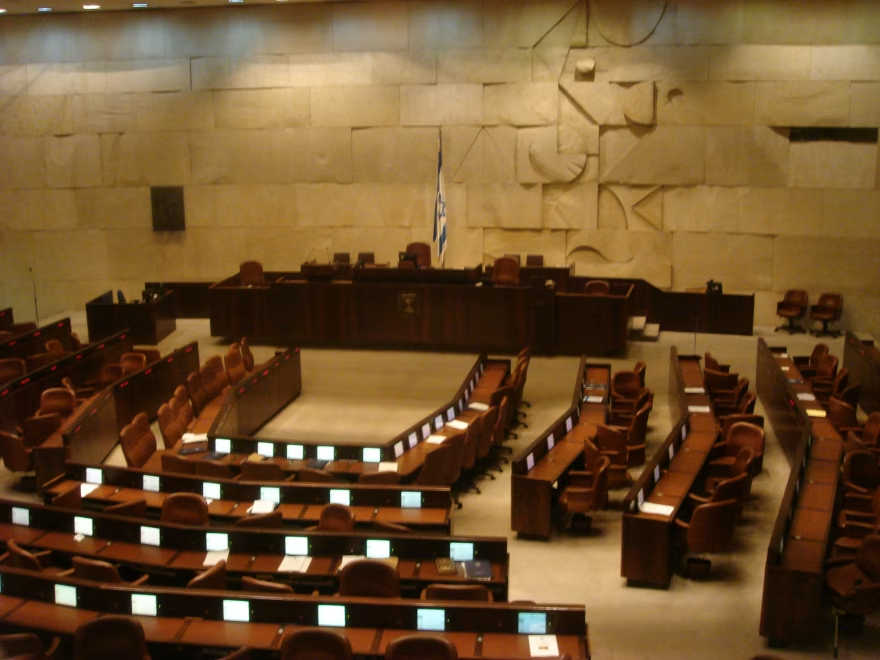
The whole country is one district
A ballot in Haifa, Beersheba, or Jerusalem enters the same national count. The model allows ideological, religious, and minority parties to win representation without concentrating voters in one region. It also weakens the direct link between a legislator and a locality because each list determines the order of its candidates.
The threshold separates small lists
Parties need at least 3.25 percent of valid votes to participate in the allocation of seats. Votes for lists below that threshold produce no mandate. Supporting a small party can therefore express a clear value while creating a risk that the vote will have no representation in the final parliament.
The Bader Ofer formula handles remainders
After the initial calculation some seats cannot be assigned by a simple share. Israel uses a formula named after legislators Yohanan Bader and Avraham Ofer. Two lists may sign a surplus vote agreement before the election and be considered together when the last seats are allocated.
The election begins the process of forming a government
No single party has long been able to win the 61 seats required for a majority by itself. Counting is followed by coalition negotiations. After consultations the president assigns the task to the legislator considered most likely to form a government. The election sets party strength, but agreements between parties shape the cabinet.