An experienced minister in the defense portfolio
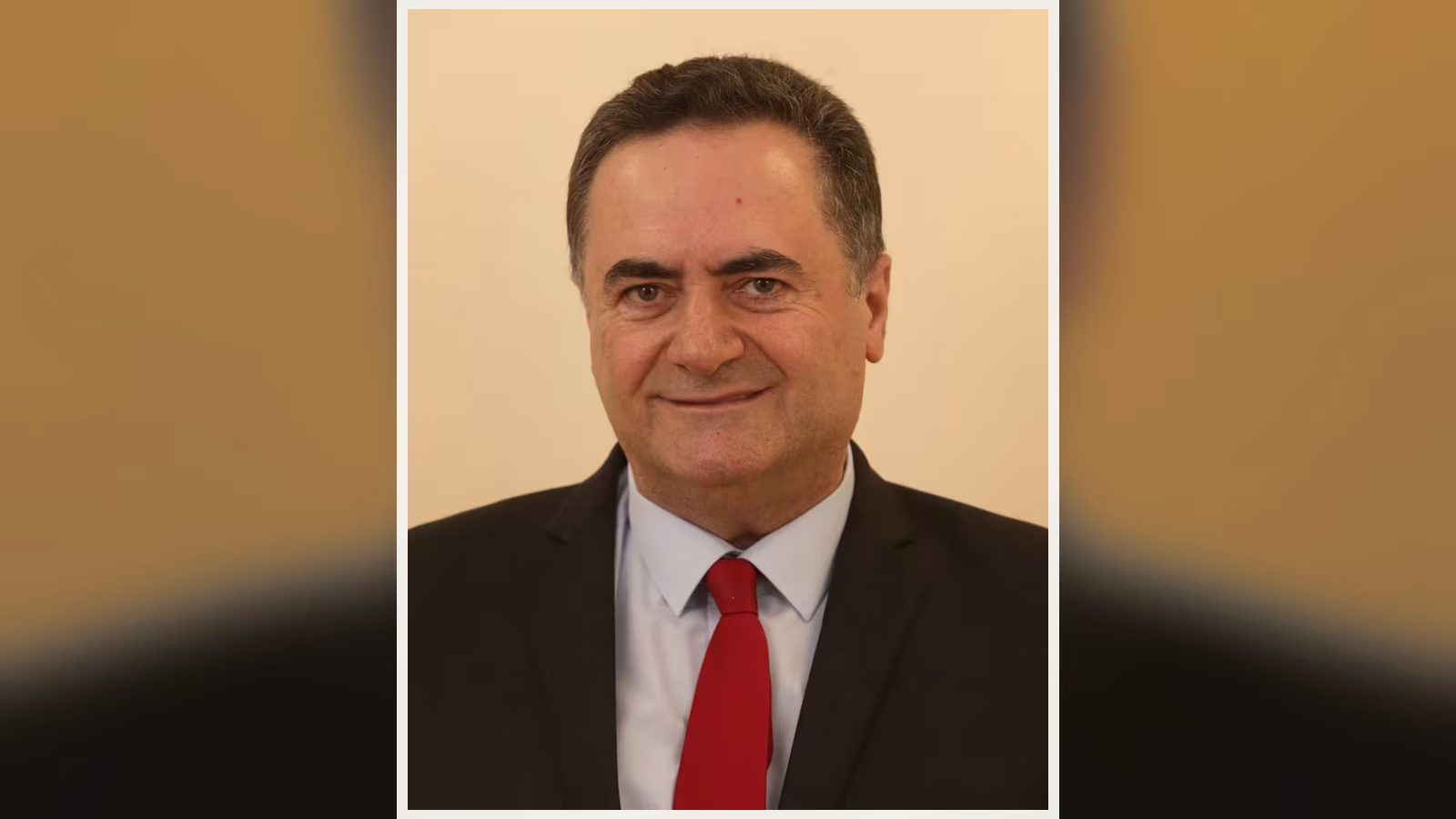
Israel Katz became defense minister in November 2024. He entered the post as a longtime Likud lawmaker and a politician who had already led the transport, energy, finance and foreign ministries. He therefore represents an experienced manager of major government departments rather than a specialist arriving from military command. His task is to translate the government's security objectives into budgets, procurement, international cooperation and civilian management of the defense system.
The Defense Ministry is one of the country's most powerful institutions. It provides equipment and supports the long term development of the armed forces, coordinates research and development, oversees defense exports and maintains ties with allied ministries. The minister also serves in the security cabinet and participates in political decisions on the use of force. Military commanders direct specific operations, while the government and the minister set the political framework and answer to the public and the Knesset.
From regional politics to Likud leadership
Katz was born in Ashkelon in 1955 and studied at the Hebrew University of Jerusalem. He entered national politics through Likud and has served in the Knesset since 1998. During his long career, he built a position within the party structure and focused on infrastructure, security and regional connectivity. His political profile is firmly associated with the right, while he has also gained a reputation as a minister attentive to practical projects and institutional oversight.
A long parliamentary career brings detailed knowledge of the budget process, coalition negotiations and committee work. A defense minister needs all three. Defense spending competes with civilian expenditure, major contracts require multiyear commitments and international agreements need political support. Katz's strength therefore lies not only in public statements but also in navigating a system where the military, ministries, industry and foreign partners meet.
Transport, infrastructure and energy
Katz gained his longest previous ministerial experience in transport, a portfolio he held for roughly ten years. The period was associated with the expansion of roads, railways and airport infrastructure and with planning new connections. Criticism of individual projects and their costs is part of public debate. What matters for his professional profile, however, is that he managed large investments and a public procurement system. These skills transfer to defense, where logistics and long term planning determine the state's real capacity.
He also served as minister of energy and intelligence. Energy security in the region concerns natural gas, infrastructure protection and relations with neighboring states. The intelligence portfolio requires coordination among institutions whose work is not public but informs government decisions. Katz thus brought experience with civilian infrastructure, strategic resources and interdepartmental security cooperation to the Defense Ministry, not merely party authority.
Finance and foreign affairs as preparation for defense
Katz led the Finance Ministry from 2020 to 2021 during the pandemic. He had to address compensation, restrictions on economic activity and exceptional public spending. Although experts differ in their assessment of the measures from that period, the post gave him experience with crisis budgeting and support for companies and households. As defense minister, he now negotiates with the Finance Ministry over the costs of mobilization, production capacity, equipment purchases and the long term replenishment of stocks.
He headed the Foreign Ministry during two periods, most recently before moving to defense. Knowledge of the diplomatic network is important for intergovernmental defense agreements, export licenses and coordination with the United States and European partners. A defense relationship is not merely a technical delivery. It involves political commitments, protection of sensitive information, training, service and end use rules. Katz operates precisely at the point where a domestic security priority becomes long term international cooperation.
The defense industry and its technological base
Israel's defense industry includes large state owned and private companies, specialized suppliers and research teams linked to universities and the technology sector. The ministry funds development, defines military requirements and regulates exports through its relevant departments. Under Katz, the ministry announced in 2026 a record value of defense export contracts for the previous year and continued investment in air and missile defense systems.
The value of signed contracts is not the same as immediate revenue or delivered equipment. Major projects are fulfilled over many years and require manufacturing capacity, service and political approvals. The ministry must meet the needs of the Israel Defense Forces while assessing foreign demand. Katz publicly links export success with technological quality and operational experience. The editorial perspective adds that each transaction carries its own legal, ethical and security responsibilities.
What it means for Czech Israeli cooperation
Czechia and Israel cooperate in defense technology, cybersecurity, training and research. For a Czech ministry, military organization or company, the Israeli defense minister is a political partner at the highest level. The practical work, however, is done by specialist departments, the export directorate and individual industrial companies. A successful project requires a precisely defined need, security clearances, financing and long term service. A good political climate matters, but it does not replace technical and legal requirements.
This profile places Katz's current role in the context of his earlier experience in finance, foreign policy and infrastructure. It does not assess individual military operations or endorse government positions. The ministry's official profile and agenda are listed among the sources so readers can verify responsibilities and current information. A full picture also requires attention to decisions by the government, the Knesset and military command, as well as independent information on budgets, procurement and the effects of security policy.
Sources and editorial note
The Jews.cz editorial team prepared this article from the public materials listed below. Statements made by a company or institution are explicitly distinguished from independently documented facts and editorial interpretation.