Context
The Maharal worked in Prague around the turn of the seventeenth century, and his name remains connected with the Old New Synagogue and the Old Jewish Cemetery. As a rabbi and scholar, he wrote about ethics, education, biblical interpretation and the relationship between an individual and the community.
What matters
The clay Golem legend acquired its familiar form in much later literature. It attracts attention to Josefov, yet it can obscure the Maharal’s own writings and the historical setting of Rudolfine Prague. Separating documented evidence from literary tradition does not diminish the story; it reveals its different layers.
Practical view
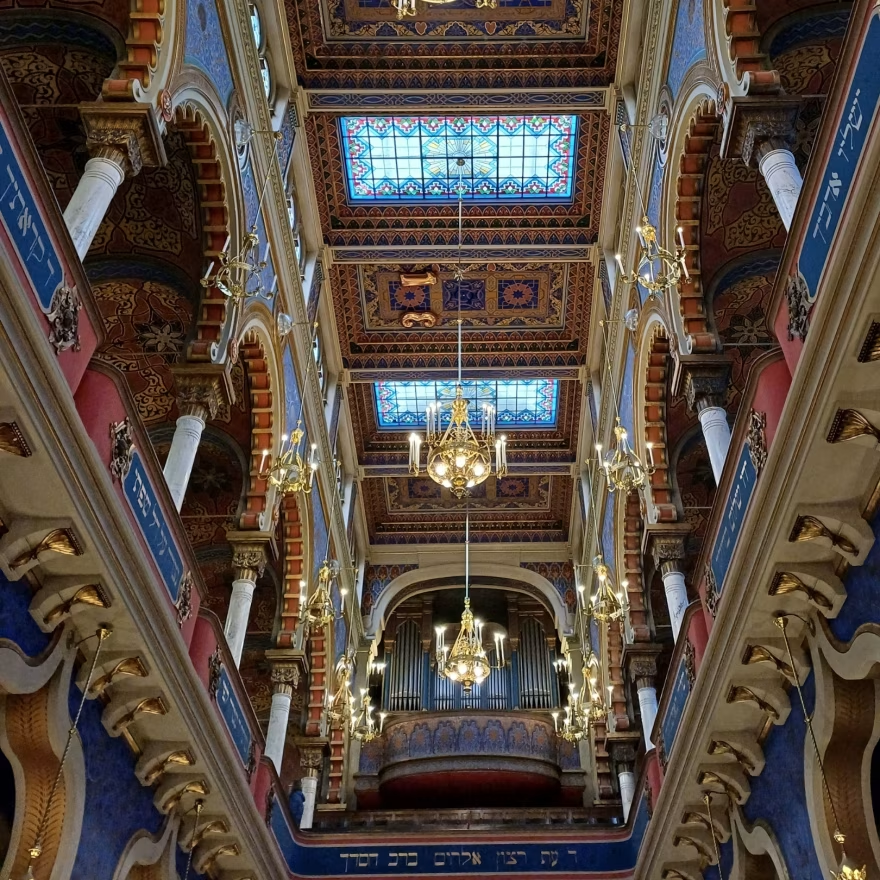
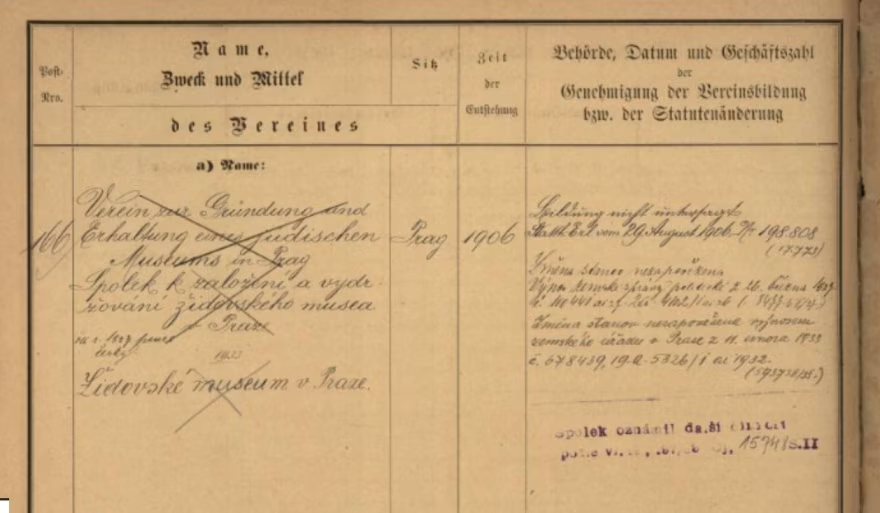
A visit can connect the Maharal’s grave, the Old New Synagogue and the museum exhibitions of the former Jewish Town. At each place, it is useful to ask what comes from contemporary evidence and what belongs to later memory. That discipline protects history from becoming a single attractive anecdote.
Takeaway
The Maharal remains relevant because he offered serious answers to questions of learning, authority and communal cohesion. The Golem can be an inviting entrance, but it should not be the final stop in discovering his life, thought and influence.