The Shema is more than one sentence
The opening verse from Deuteronomy is the best known part, but the complete liturgical recitation contains three biblical passages. They address love of God, teaching children, daily conduct, reward and responsibility, and tzitzit as a visible reminder of the commandments. A short declaration consequently opens into a much wider program for living.
Morning and evening come from the text
The instruction to speak these words when lying down and rising was understood by the rabbis as an obligation to recite the Shema twice each day. It therefore belongs to morning and evening services. The timing is purposeful. The text frames the day by returning to a basic affirmation when a person enters activity and when that activity ends.
Covering the eyes supports attention
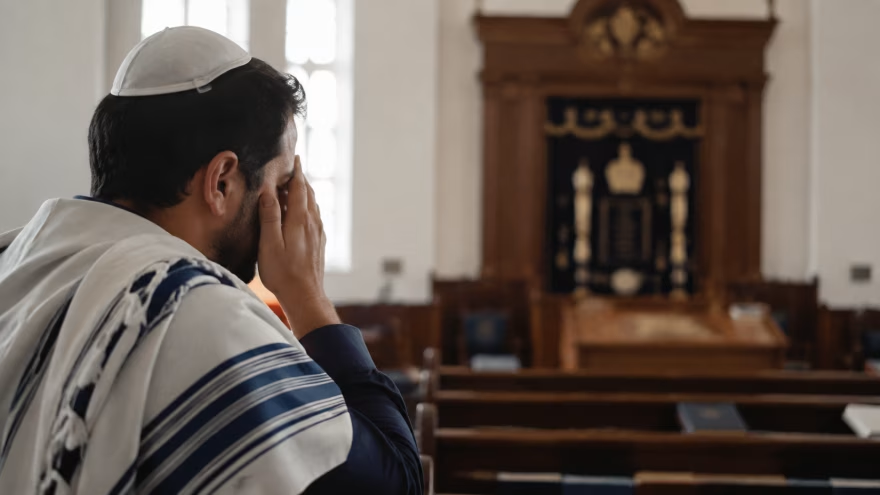
Many people cover their eyes with the right hand during the first verse. The custom reduces visual distraction and makes room to attend to the meaning of the words. It is not a superstition or a prohibition on looking at a sacred text. It is a simple physical gesture that supports intentional recitation instead of the mechanical repetition of a familiar sentence.
The words also appear in mezuzah and tefillin
The Shema passages instruct Jews to bind the words on the arm and head and to write them on the doorposts of the home. Their text therefore appears in tefillin compartments and on the parchment inside a mezuzah. The same passage joins voice, memory, body, the education of children, and the home. This helps explain its exceptional symbolic power.