A culinary career built on research
Adi Ashkenazi gained experience at Alchemist, Belcanto and &Moshik, and later led the kitchen at Jerusalem's Mamilla Hotel. His work uses fermentation, distillation and other techniques that move cooking from repeating a recipe toward a controlled experiment.
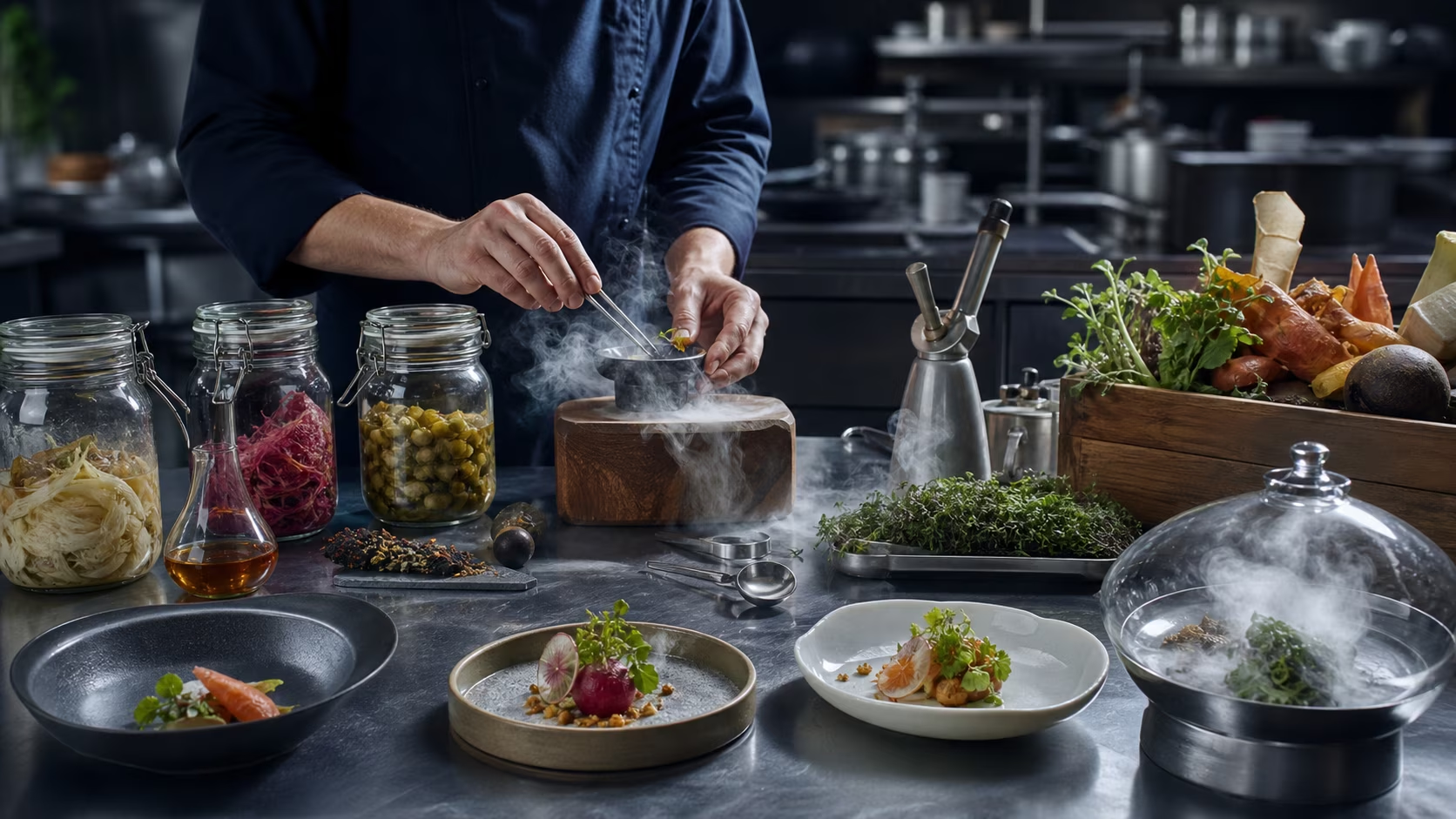
Molecular gastronomy is sometimes reduced to spectacular foam or smoke. Its more useful form lies in understanding structure, temperature, microorganisms and time. A chef can then manage flavour and product stability more precisely and reproduce the result during normal service.
Waste is also a cost
Ashkenazi connects technical methods with sustainability and reduced food waste. For a restaurant, this is not merely an environmental declaration. Every unused ingredient has already been purchased, transported, stored and processed. Fermentation, stocks, extracts or distillates can return part of that value to the menu.
This approach has limits. Food safety, allergens and flavour take priority over the effort to use everything at any price. A sound circular kitchen therefore needs a system, measurement and discipline, not random improvisation with leftovers at the end of a shift.
An ambition for a Michelin star
The chef speaks openly about his goal of winning Israel's first Michelin star. The guide would first have to assess restaurants in the country systematically, so a personal ambition is not the same as an immediately attainable result. It nevertheless sets a benchmark for consistency, technique and service.
The broader impact is more interesting for Israeli gastronomy. People with international experience return with new methods and adapt them to local ingredients and the cultural environment. This creates expertise useful beyond fine dining, including product development, fermented drinks, waste reduction and team training.
Technique should serve flavour, not spectacle
Molecular cuisine is associated with foams, gels and striking presentation, but its professional meaning is broader. A chef works with temperature, structure and ingredient reactions so that a result can be repeated. Adi Ashkenazi builds his approach on a link between scientific curiosity and everyday food. Technique creates value when it improves flavour, texture or the use of an ingredient and is not merely a trick for photographs.
Repeatability is a business question for a restaurant. A dish must work with a different shift, on a busy evening and despite seasonal variation in ingredients. Precise procedures can reduce waste and support training, while also increasing demands on equipment and preparation. The chef therefore chooses a technique for its benefit to the guest and the operation, not for the number of laboratory tools that appear on the table.
Sustainability is measured in kitchen waste
A restaurant can work with parts of ingredients that would normally be discarded, extend shelf life through fermentation or plan portions more precisely. Such steps have a direct environmental and financial effect. A sustainability claim still needs numbers: how many kilograms of waste the operation creates, what it can use, where it buys from and how much energy demanding techniques consume. One local ingredient does not automatically offset the entire operation.
Israel brings water constraints, a hot climate and a diverse tradition of preservation, alongside the global supply chains of modern gastronomy. The tension between local and luxurious can itself be creative. A credible concept does not celebrate an ingredient only because of its origin. It explains how it was grown, transported and used. Guests can then understand both the story and the price without decorative moralising.
An authorial kitchen is also a small business
Behind a chef's name stand rent, a team, inventory, reservations and margins. An experimental menu needs a sufficient price, but it must not repel the audience for which it was created. Workshops, guest appearances, product collaborations and catering can diversify revenue. Every channel requires different logistics and can weaken the focus on the restaurant. The business model should grow from the team's capacity, not only from the chef's visibility.
A chef's brand is sensitive to transparency in partnerships. If a partner supplied an ingredient or a device, the guest should know where the editorial or culinary choice ends and advertising begins. Long term reputation depends on consistent quality and an honest description. Product innovation is tested quickly in gastronomy. A guest returns, recommends the restaurant and accepts the price, or the effect remains a one time novelty.
Czech and Israeli gastronomy can share methods
Czech restaurants work with fermentation, preservation and seasonality through a different tradition, but they face similar costs and staff shortages. An exchange of chefs can be more concrete than a general cultural evening. Developing a menu together, measuring waste or applying the same technique to local ingredients shows what can be transferred. Each partner can preserve its own flavour context.
This article about Adi Ashkenazi is neither a recipe nor a review based on a single visit. It looks at a chef as an author, technologist and entrepreneur. A fuller assessment requires a tasting, an interview with the team and operating data that a public profile does not provide. Distinguishing an inspiring story from a verified result gives food journalism more value than a simple list of effects.
The next report should enter the real kitchen
A profile based on public material shows the chef's approach, but an independent assessment requires a visit to the operation. An editor should follow one ingredient from purchase through preparation to waste, record the technique and taste the result without a promised endorsement. A conversation with the team is important because a sustainable procedure has to work even when its author is absent. Only operational detail can show whether scientific language changes the everyday kitchen or mainly its presentation.
Every savings claim needs a unit and a basis for comparison. Less waste can be offset by higher energy use, while expensive equipment can reduce labour and errors. Guests also judge flavour, service and price, none of which is replaced by an environmental metric. A Czech and Israeli chef exchange could provide a useful test by applying the same method to different ingredients and costs. That would create a report about transferable innovation, not another portrait built only on a strong personal story.