Urban redevelopment threatened eight centuries of traces
At the start of the twentieth century Prague sought to transform medieval districts into a modern capital. Demolition in Josefov removed poor housing but also buildings and interiors carrying the history of the Jewish community. The need to save at least some objects became the immediate reason for establishing a museum.
Salomon Hugo Lieben led the initiative
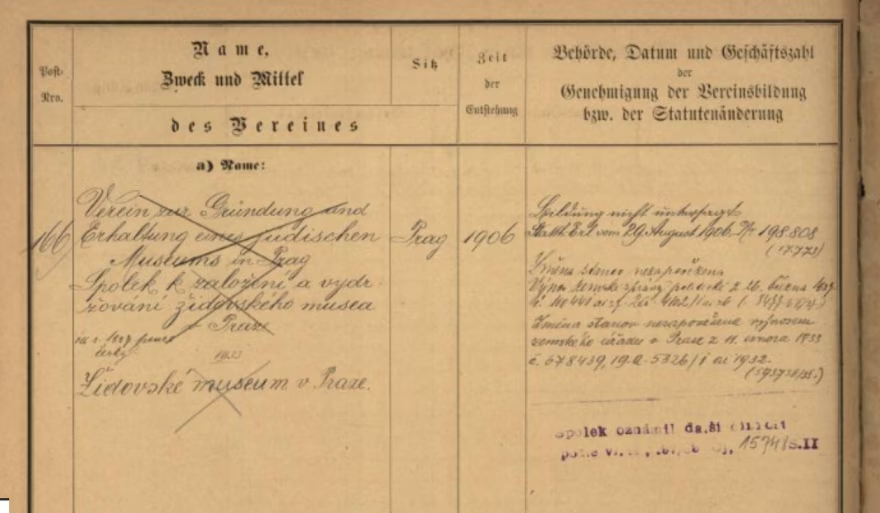
The historian Lieben headed a group from Prague’s Jewish community that created the Society for the Establishment and Maintenance of the Jewish Museum in Prague. The bilingual Czech and German statutes were approved by the Bohemian authorities. This formal step gave a private effort a legal structure for long term care of a collection.
The museum’s history later took a tragic turn
During Nazi occupation, objects from dissolved Jewish communities were concentrated in Prague. The collection grew enormously amid the deportation and murder of its former owners and custodians. State control followed under communist Czechoslovakia. The museum returned to independent work after restitution in the 1990s.
The anniversary celebrates more than an institution
One hundred and twenty years recall a decision to preserve material evidence before it disappeared. Today the museum manages synagogues, a cemetery, archives, a library, and extensive collections. Its task includes protecting originals and explaining the circumstances in which objects were created, acquired, or forcibly abandoned.